The Dirty Truth About That Strange Fabric Strip On Your Hotel Bed
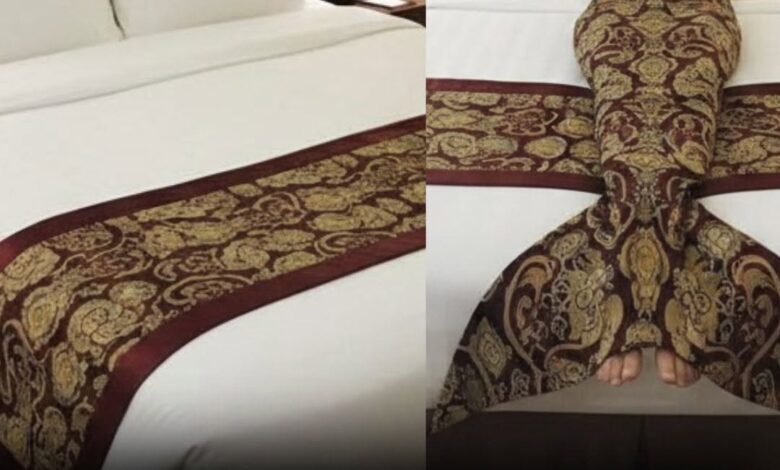
You check into a luxury hotel, toss your bags onto the pristine white comforter, and immediately notice that bizarre, brightly colored strip of fabric draped across the foot of the bed. Most travelers assume it is merely a decorative afterthought, a simple stylistic choice meant to break up the monotony of the bedding, and they toss it onto a chair without a second thought. But you are making a grave mistake. That strip of cloth is not just for decoration, and its presence serves a hidden, often unsanitary purpose that the hotel staff is desperate for you to understand before you climb under the covers.
That piece of fabric, commonly known as a bed runner, is a staple in the hospitality industry, found in hotels ranging from budget motels to five-star resorts. It is usually a heavy, durable material, often dark in color, and it is positioned strategically at the foot of the mattress. While many guests view it as an annoying obstacle to getting into bed, the runner is actually a multipurpose tool designed to protect the integrity of the expensive linens underneath. To understand why it exists, you have to look at how the average person interacts with a hotel room the moment they step through the door.
One of the most frequent behaviors observed by housekeeping staff is the immediate urge to dump personal belongings wherever there is space. Guests return from a long day of travel and drop their dirty backpacks, handbags, and carry-on suitcases directly onto the crisp, white bedspread. These items have traveled through airports, sat on public transit floors, and been exposed to a variety of unknown surfaces, collecting bacteria and dirt along the way. The bed runner acts as a designated staging area for these items. By placing your luggage on the runner rather than the bare linens, you prevent your gear from cross-contaminating the bed where you will eventually rest your head.
Furthermore, the runner serves as a critical defense against one of the most common habits of modern travelers: wearing shoes and outdoor clothing in the bedroom. It is incredibly common for guests to kick off their shoes or even collapse onto the bed with their footwear still on after a tiring journey. The bed runner provides a dedicated buffer zone at the foot of the mattress, allowing guests to rest their feet or legs without grinding outdoor debris, gravel, or urban grime directly into the duvet. Because the runner is typically darker than the rest of the bedding, it hides the inevitable wear and tear, and it is significantly easier for the cleaning staff to swap out or launder than the massive, heavy comforters underneath.
Then there is the issue of mid-day snacking, a beloved tradition for many vacationers. After a long afternoon of exploring, there is nothing more relaxing than lounging in bed with a box of local takeout or a bag of chips. We have all experienced the stress of trying to keep crumbs off the sheets, but the bed runner is effectively designed as a portable tablecloth. It offers a structured surface to hold your snacks and drinks, minimizing the risk of a catastrophic stain on the primary bedding. The durable fabric is often treated to be more resistant to spills than the delicate, high-thread-count sheets that the hotel spends so much time laundering.
Even more discreetly, the bed runner serves a functional role in private moments. For couples, the runner is often repurposed as a protective mat. It is a simple, effective way to guard the underlying bed linens against accidental stains, ensuring that the room remains in pristine condition for the next guest. By keeping a layer of material between the activity and the primary comforter, the runner saves the hotel from having to perform intensive, costly cleanings or even disposing of bedding that has been rendered unpresentable. It is a pragmatic solution to a very human reality.
If the bed runner is so useful, why do so many guests hate it? The problem is largely one of communication. Hotels have failed to explain that the runner is not just a style choice; it is a piece of essential room equipment. When a guest walks into a room, they see a beautiful, carefully staged scene, and they feel a natural urge to keep it clean. When that runner is perceived as an unnecessary, cluttering piece of fabric, it is treated with disdain. If hotels were clearer about the runner’s intended use—as a footrest, a luggage protector, and a snack mat—guests would be far more likely to embrace it as a vital part of the room’s infrastructure.
So, the next time you find yourself staring at that colorful piece of fabric, don’t be so quick to toss it aside. Look at it as a shield that has been carefully placed to make your stay cleaner and more convenient. It is there to keep your personal items off the clean sheets, to catch the stray crumbs from your late-night movie snacks, and to protect the bed from the chaos of your travels. Embracing the bed runner isn’t just a way to keep your room tidy; it is a way to ensure that your experience remains hygienic from the moment you drop your bag to the moment you turn out the lights.
In the end, every item in a hotel room serves a purpose, no matter how small or seemingly trivial. The hospitality industry operates on a razor-thin margin of efficiency, and every square inch of the room is designed to facilitate a specific, repeatable guest experience. The bed runner is a masterclass in this efficiency—a low-cost, high-impact solution to a dozen daily problems. By understanding the true function of the items around us, we can navigate the world of travel with a little more sophistication, a lot less mess, and a much better understanding of the unspoken rules that keep our temporary homes running smoothly. The fabric strip is not a nuisance; it is a silent, hardworking guardian of your comfort.