Are You Serving Parasites For Dinner After Using Your Slow Cooker
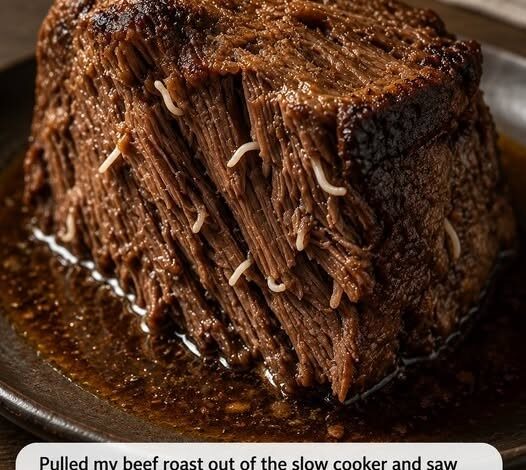
You lift the lid of your slow cooker, expecting the savory, mouth-watering aroma of a tender beef roast, but instead, you find a sight that makes your stomach drop. Nestled within the meat are strange, pale, stringy filaments that look exactly like wriggling worms or terrifying parasites. Your dinner is ruined, and your mind immediately spirals into a panic—did you just feed your family infested meat? The vision of these thread-like structures poking out from the roast is enough to make anyone swear off slow cooking forever, but before you toss the entire meal into the trash, you need the truth.
The sight of these mysterious white strands in a slow-cooked beef roast is an experience that has startled countless home cooks. It is an unsettling, visceral discovery that triggers an immediate, defensive reaction, especially when the appearance of these fibers mimics the look of a parasitic infection. However, in the vast majority of cases, what you are seeing is not a threat to your health, but rather the visible, scientific evidence of the slow-cooking process working exactly as intended. Beef is a complex biological structure, and the “parasites” you fear are actually the building blocks of a high-quality, flavorful meal.
To understand why your roast looks this way, you have to look at the anatomy of the meat itself. Beef roasts—particularly tougher cuts often chosen for slow cookers—are dense with connective tissue. This tissue is made primarily of collagen, a fibrous protein that acts as the scaffolding for muscle fibers. In its raw or quick-cooked state, collagen is tough and resilient, which is why roasts can feel chewy or rubbery if cooked too fast. However, when you subject this meat to low, consistent heat over several hours, a remarkable chemical transformation occurs. The heat breaks down the tough collagen molecules, causing them to denature and melt into a soft, gelatinous state.
As this connective tissue breaks down, it often pulls away from the muscle fibers. Because collagen is inherently stringy and thread-like, these melted strands can become visible as they push toward the surface of the meat. In some cases, they can appear as thin, pale, or white strands that weave through the muscle fibers or poke out from the roast entirely. To the untrained eye, these strands bear a striking resemblance to small worms or larvae, especially because they are surrounded by the dark, cooked juices of the roast. This is a classic case of biological structures looking like something they are not, simply because of how they manifest during the breakdown process.
If you are still concerned that what you are seeing might be something more sinister, there are several key indicators that can help you differentiate between normal connective tissue and a genuine concern. True parasites in beef are exceptionally rare in modern food supply chains. Stringent inspection systems at the packing and processing levels are designed to identify and remove products that show signs of infection long before they reach the grocery store shelf. Furthermore, the heat involved in slow cooking is lethal to almost any organism. If your slow cooker maintained a proper temperature, it would have been more than sufficient to render any potential biological contaminant completely harmless, though it is the rarity of such occurrences that is the most important factor.
When you examine the “worms” in your roast, look closely at their physical characteristics. Connective tissue will feel soft, slick, and slightly gelatinous to the touch. When you pull on these strands, they will break apart or dissolve easily under pressure, consistent with the texture of cooked fat and protein. In contrast, parasites would typically appear as distinct, firm, and uniform structures. They would hold their shape even when prodded or pulled, and they would not possess the same semi-transparent, melting quality that characterizes collagen. If the strands you are seeing are soft, pliable, and integrated into the structure of the meat, you are almost certainly looking at the remnants of connective tissue that has been successfully rendered into tenderness.
Beyond the visual, trust your other senses. A roast that has been properly stored, refrigerated, and cooked is a safe food product. If your beef smells normal—earthy, savory, and rich—there is no reason for alarm. If it was stored safely in your refrigerator and cooked to a safe internal temperature, the process of slow cooking has done exactly what it was supposed to do. The presence of these stringy bits is actually a sign that your roast has achieved the level of breakdown required to reach the “fall-apart” tenderness that makes slow-cooked meals so desirable. If you were to have pulled the meat out of the cooker earlier, that connective tissue would still be tough and chewy, and you would not have noticed these strands.
The next time you find yourself staring at your slow-cooked dinner with suspicion, take a deep breath and remember the science of the kitchen. Cooking is, at its core, a series of chemical reactions, and sometimes those reactions result in appearances that are unexpected or even mildly disturbing. The “worms” you found are simply the markers of time and heat, the evidence of collagen giving way to flavor. It is a harmless, and indeed essential, part of preparing a delicious beef roast. Instead of viewing them as invaders, think of them as the hallmark of a long, slow cook that has successfully transformed a tough cut of meat into a tender, juicy, and flavor-packed dish.
Your slow cooker is a tool of transformation, taking the structural complexity of a muscle and turning it into something you can enjoy with a fork. While the visual of those pale, stringy bits may have momentarily stopped your appetite, they are nothing more than the meat showing you its own internal architecture. Keep cooking, keep experimenting, and trust in the process. Your dinner is not a health hazard; it is a perfectly prepared meal that is simply reflecting the reality of what happens when you apply gentle heat to a natural product. You can serve your roast with complete confidence, knowing that what you are seeing is just the science of the kitchen playing out right in front of you, providing the texture and moisture that only a slow, deliberate cooking process can create.