TRUMP REWRITES THE RULES ON PSYCHEDELIC MEDICINE AND ELECTION SECURITY IN SHOCKING NEW EXECUTIVE ORDERS
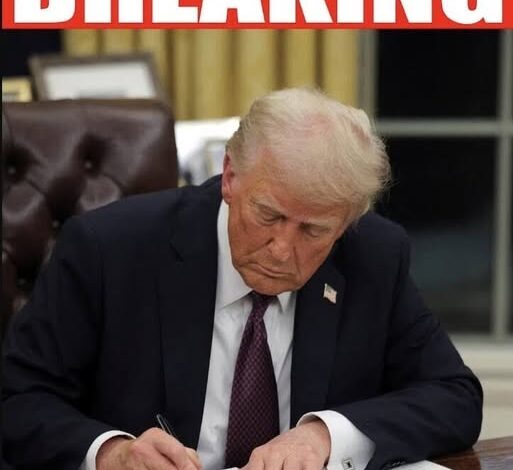
The political landscape has been set ablaze by a radical new directive that forces a high-stakes collision between cutting-edge medical science, the agonizing suffering of our nation’s heroes, and the cold reality of partisan politics. With the stroke of a pen, the White House has bypassed traditional bureaucratic bottlenecks, demanding that the FDA fast-track psychedelic treatments for veterans battling the invisible wounds of war. This is a gamble of historic proportions, trading decades of regulatory caution for the promise of rapid, life-saving relief. But as this medical revolution unfolds, a darker, more restrictive parallel move is tightening the federal grip on our elections.
The executive order regarding mental health treatment represents a seismic shift in how the government views and regulates substances like ibogaine and MDMA. For years, these compounds have lingered in the shadows of the medical community, shackled by strict legal classifications despite growing anecdotal and clinical evidence suggesting they offer profound relief for individuals suffering from treatment-resistant PTSD, severe depression, and debilitating traumatic brain injuries. By formally labeling these substances as breakthrough therapies and demanding that the FDA and the Department of Veterans Affairs operate with unprecedented urgency, the administration is effectively declaring that the current pace of medical approval is an unacceptable failure.
The directive mandates a radical synchronization of data between federal agencies, forcing scientists to share findings at a speed that has historically been considered impossible. The ultimate goal is the rapid rescheduling of these psychedelics, dismantling the outdated legal barriers that have prevented doctors from prescribing them even when their own clinical judgment suggests they are the best course of action. It is a bold, controversial strategy that positions the presidency as a disruptive force in the pharmaceutical and medical research worlds, betting that the political risk of endorsing such unconventional treatments is outweighed by the potential to heal a generation of veterans who have been failed by standard psychiatric care.
However, this push for efficiency is not confined to the laboratory. In a striking contrast, the White House has simultaneously issued a separate set of directives designed to impose much stricter oversight on the American electoral process. While one hand of the presidency reaches out to accelerate the medical liberation of veterans, the other is reaching out to secure a hard grip on the machinery of democracy. This second executive order initiates a new level of federal-state coordination focused specifically on voter verification and the tracking of mail-in ballots. By shifting the focus of election administration toward centralized, rigorous control, the administration is signaling a fundamental disagreement with the current state of decentralized, state-led election oversight.
These two initiatives, when viewed together, reveal a governing philosophy that is obsessed with the concept of efficiency, yet defines it in radically different ways depending on the target. In the realm of healthcare, efficiency is characterized as the removal of obstacles and the empowerment of medical experts to act in the best interest of their patients. It is a strategy of liberation from the inertia of the federal government. Conversely, in the realm of electoral integrity, efficiency is being defined as the imposition of centralized rules and the elimination of variation across state lines. It is a strategy of restriction and increased administrative friction.
This dichotomy highlights the central tension of the current administration: a desire to harness executive power to achieve immediate, tangible outcomes, whether those outcomes are the curing of trauma or the certification of a vote. By forcing these two worlds to move in tandem, the White House is essentially testing the limits of what a presidency can achieve through directive rather than legislation. The potential medical breakthroughs are being linked to a more disciplined, federally managed approach to the democratic process, suggesting that the administration views both as components of a national restoration project.
The veterans’ advocacy community has largely reacted with a mixture of hope and skepticism. For those who have been lobbying for access to psychedelic-assisted therapy, this order is the most significant development in decades. They argue that if the government can move mountains to mobilize for war, it should be able to move with equal speed to heal those who returned with shattered spirits. Critics, however, warn that rushing the FDA process on substances that have complex pharmacological effects could lead to unforeseen public health consequences. They argue that the scientific rigor of the approval process exists for a reason, and that political pressure—even when motivated by the best of intentions—has no place in determining the safety profile of potentially mind-altering drugs.
Simultaneously, the reaction to the election security order has been predictably polarized. Supporters see the increased federal coordination as a long-overdue step toward ensuring that every vote is verified according to a uniform, national standard, thereby protecting the integrity of the ballot box. They argue that in an era of digital misinformation and decentralized systems, the federal government has a duty to set the baseline for what constitutes a secure election. Detractors, however, view the order as a direct assault on the constitutional authority of the states to conduct their own elections. They fear that increased federal oversight is a pretext for voter suppression and a dangerous concentration of power that could compromise the very democracy it claims to protect.
Ultimately, these two executive actions present a complex, multifaceted picture of a presidency that is determined to impose its will on the most intimate aspects of human health and the most fundamental structures of political power. Whether this strategy will be viewed as a courageous, effective use of authority or as a perilous overreach will likely depend on the success or failure of the results. If the veterans begin to show significant, verifiable recovery and the elections remain smooth and uncontested, the administration may well be praised for its decisiveness. If, however, the medical treatments prove unsafe or the election oversight triggers a constitutional crisis, the legacy of these orders will be one of monumental, disruptive failure. In either scenario, the nation is witnessing an experiment in executive governance that will likely define the parameters of presidential power for years to come.