My Wife Married Me in the Last Week of Her Life – Her Will Revealed Why She’d Insisted on the Ceremony
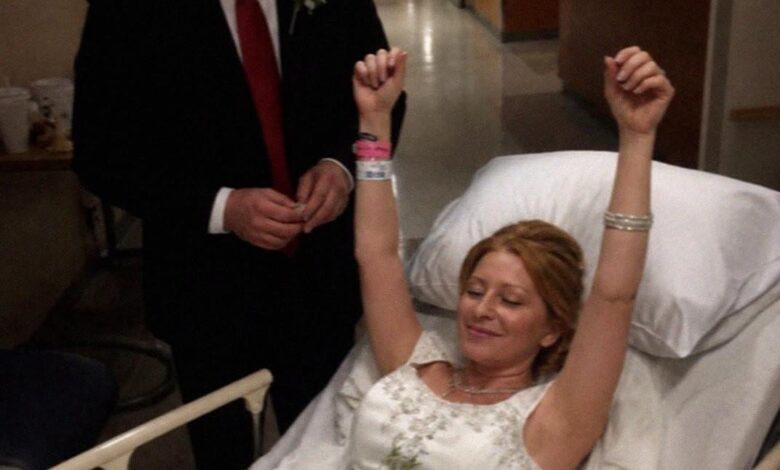
Daniel knew Margaret had a rare autoimmune disease when they fell in love at 27, but neither of them allowed illness to define every moment. Margaret named her IV pole Stanley, joked with nurses, and laughed when Daniel accidentally called her “Margarine” in a text. As her condition worsened, he drove her to treatments, sat through appointments, learned hospital routines, and discovered exactly when she needed silence or conversation.
Eighteen months into their relationship, Daniel proposed while they ate Chinese takeout on his apartment floor after one of Margaret’s hospital stays. She cried, but her answer was no. Margaret explained that she loved him too much to make him a widower or leave him responsible for medical debt. Daniel proposed several more times over the years, and she refused every time. Eventually, he stopped asking because respecting her decision became part of loving her.
Their lives gradually revolved around the disease. Daniel reduced his working hours, canceled trips, sold his car, and spent savings intended for a house. He also rejected a promising job in Chicago because Margaret could not leave her doctors. She hated watching him sacrifice opportunities, but he believed they would rebuild their plans later. Margaret understood something he refused to face: she might not have that later.
Four years after they met, doctors offered a complicated operation that could greatly improve her condition but might also kill her. A week before surgery, Margaret took Daniel’s hand and asked him to marry her. When he asked what had changed, she said that if she did not survive, she wanted to die as his wife rather than his girlfriend. If she recovered, they would already be married.
They organized a small hospital wedding. Their parents and close friends attended, along with doctors and nurses who had come to know them. Margaret wore a white cardigan over her hospital gown, and Daniel wore his only suit. A nurse tied white ribbon to the bed rail, while Daniel’s mother brought a grocery-store cake with bright blue icing. For twenty minutes, they were not a patient and caregiver. They were newlyweds.
Six days later, Margaret entered surgery wearing her wedding ring. Complications followed, and she died at 31. Daniel moved through the next weeks in shock, sleeping on the couch because their bed smelled like her shampoo and ignoring the food friends delivered. Then Walter, Margaret’s family lawyer, called and asked him to sit down before he read her will.
Margaret had inherited an interest in a family trust, something Daniel never knew existed. Strict rules prevented her from freely using the principal for medical bills. If she died unmarried, the remaining interest would return to other family beneficiaries. A legal spouse, however, could receive her share through a survivorship provision. After obligations and taxes, Daniel would inherit slightly more than $400,000.
Daniel initially felt furious. Margaret had watched him drain his savings without telling him about the trust. Walter explained that most of the money had not been available during her life, then continued reading her letter. Margaret wrote that Daniel would have fought endlessly to use every dollar for another treatment. She wanted one thing her illness could not consume, and she wanted to return something to the man who had given up his savings, his car, a house, and the Chicago job for her.
Her instructions were specific. Daniel should buy the old house with the porch he had always wanted, repair the floors, adopt the dog they could not have because of her allergies, travel somewhere without a hospital cafeteria, and accept another good job if one appeared. She admitted that she had rejected his proposals because she believed refusal protected him. Marrying him finally allowed her to die as his wife while also leaving him a future.
Daniel waited almost a year before using the money. Then he found an aging house with peeling paint, crooked shutters, and an enormous porch. He bought it, fixed the floors, painted the kitchen, and adopted a shelter dog with one floppy ear. He named the dog Stanley after Margaret’s IV pole. Four years later, their rings remain together in a box beside his bed.
People sometimes react awkwardly when Daniel says his marriage lasted six days. He explains that the relationship lasted years; only the legal marriage was brief. The ceremony did not create their devotion. It gave Margaret one final way to name it and one final opportunity to care for him. Her greatest gift was not the money or the house, but permission to build a future without believing that happiness meant he had forgotten her.