Hidden Name on the Bridge
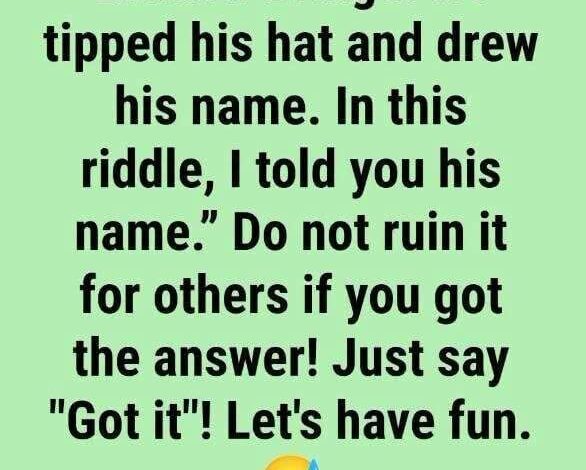
His name was never missing—you just read straight past it. A stranger on London Bridge tips his hat, and a deceptively simple riddle challenges you to identify him using nothing but the words already on the page.
“I met a man on the London Bridge. He tipped his hat and drew his name.” The encounter sounds like the beginning of a mystery, especially when the next line insists, “In this riddle, I told you his name.” But there is no missing introduction to uncover, and the bridge itself offers no special clue. The solution comes from changing how you divide the sentence, rather than imagining anything beyond it.
The man’s name is Andrew. Put “and” and “drew” together, removing the space, and the answer appears: Andrew. Read aloud, those two words can also sound like the name, making the trick particularly satisfying when someone recites the puzzle. What initially seems like an odd description of a gentleman’s actions is actually the reveal. That is the charm of this little riddle: it invites you to search for information, then shows you that you had it from the very beginning.
The opening is carefully arranged to make the reader picture the encounter. A bridge suggests a place where strangers pass one another. A tipped hat suggests a greeting. By the time the narrator says the stranger drew his name, it is natural to imagine a hand moving across a page. That reading creates a new question. Where is the drawing, and how could the reader know what it said? The riddle relies on that little picture taking hold before the reader studies the sentence itself.
Try reading the line as though you were telling the story to someone beside you. The words “and drew” will pass quickly, with very little pause between them. In writing, the space makes them look like two separate pieces of information. One connects the actions, and the other describes what the man did. In speech, the boundary can almost disappear. That gives the listener a chance to hear Andrew before realizing what they have heard.
The last line tells you where to look. “I told you his name” points back to what the narrator actually said. If you take that statement seriously, you can set aside guesses about landmarks or historical figures associated with the bridge. You can also ignore the idea that the hat contains a clue. The ordinary phrase that links one action to the next has all the sounds you need. Removing the space makes the connection clear on the page as well.
The answer works because both readings can survive in the same sentence. The storyteller can describe a man who tipped his hat and drew something, while the sound of the description gives the audience his name. Once you know to listen for Andrew, the solution may feel so obvious that it becomes difficult to hear the original line the way you did at first. The riddle is short enough to try on someone else, and you can often tell from their first guess that they have started searching the scene instead of listening to the words.