Crunchy Pink Surprise on Wall Whats Really Going on Inside Your Home
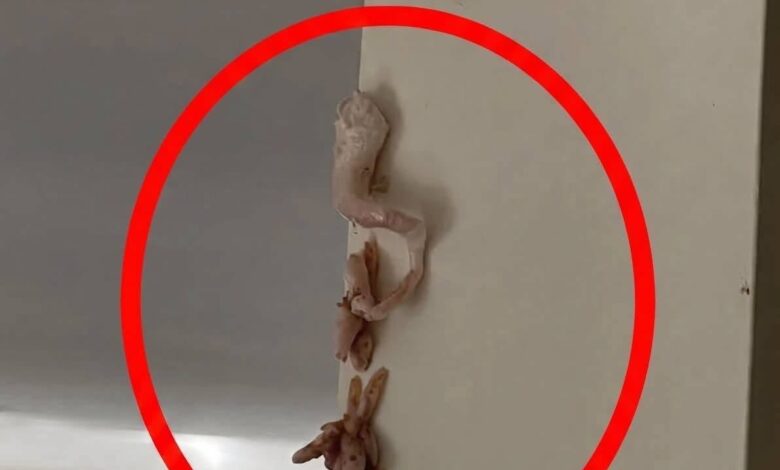
A crunchy pink mass protruding from a wall can look like mold, eggs, fungus, or something alive. In many homes, the most likely explanation is much less alarming: expanding spray foam. Builders and homeowners use this insulation to fill gaps around pipes, windows, doors, wiring, and other openings. As it cures, it expands beyond the cavity and can form irregular bubbles that harden into a crisp surface.
Spray foam comes in different colors depending on the manufacturer and product. Cream and yellow are common, but pink, orange, blue, and other shades also exist. Color alone cannot identify the material. Texture, location, age, and the surrounding construction provide better clues. Cured foam is usually lightweight, rigid or slightly springy, and filled with tiny cells when cut.
If the material appears near a recent repair, renovation, pipe opening, or window installation, insulation is especially likely. An installer may have applied more than the gap could contain and failed to trim the excess. Foam can also push through cracks as it expands. That explains why a strange cluster seems to have grown from the wall even though it is a building product.
Homeowners should still inspect before touching it. Wet foam can irritate skin and eyes, and fumes from uncured products require ventilation. Old material may be surrounded by damaged paint, dust, pest debris, or moisture. Gloves and eye protection are sensible for a small known piece, but an unidentified substance should not be scraped, vacuumed, or sprayed at random.
Moisture changes the situation. Soft drywall, stains, musty odor, active leaks, or material that continues spreading may indicate water damage or biological growth rather than simple excess foam. Mold can appear in many colors and may grow on dust, paper facing, wood, or other organic material. The visible patch may represent only part of the damp area. Fixing the water source is essential.
Pests can also use wall openings. Insect egg cases, nests, and droppings have structures unlike cured foam, but photographs can be misleading. Repeated insect activity, scratching sounds, holes, or new debris justify inspection by a qualified pest professional. Do not seal an opening until an active animal is safely removed, because trapping it inside can create a larger problem.
When the material is confirmed as cured expanding foam and the wall is dry, excess can often be trimmed carefully with an appropriate tool and covered according to the wall finish. Foam may require protection from sunlight or flame, and local building codes can require a thermal barrier. Large areas or fire-rated assemblies should be handled by a professional rather than cosmetically cut away.
Photographs are useful when asking a contractor for advice. Include a wide view of the wall, a close view of the texture, and any nearby pipe, window, or repair. Note whether the mass is hard, soft, damp, odorous, changing, or newly appeared. Those observations are more useful than a dramatic comparison with eggs or fungus.
The pink surprise is therefore often evidence of an untidy insulation job, not a mysterious organism. A calm inspection can distinguish cured foam from a leak, mold, or pests. Confirm the material, address any moisture or opening behind it, and use professional help when the wall is damaged or the substance remains uncertain. The goal is not merely to remove what looks strange but to understand why it appeared.
Renters should photograph the area and notify the property manager before cutting or repairing it. Altering a wall can hide evidence of a leak or create responsibility for damage. Owners should keep product labels or contractor records when foam is installed, since those details make later identification easier. A few minutes of documentation can prevent a cosmetic cleanup from concealing a structural, moisture, or pest issue that needs a different solution.