City Mayor ARRESTED After Investigation in Coldwater Kansas
The announcement underlying this account was made in November 2025. Kansas authorities accused Jose “Joe” Ceballos of voting without being qualified and of election perjury. The original charging document identified alleged conduct in Comanche County. These were accusations brought through a criminal case, not proof that every emotional reaction described in the earlier account occurred.
Coldwater now finds itself trapped between humiliation and hard reckoning. Voters who once waved to Jose “Joe” Ceballos at parades are replaying every campaign promise, wondering what else they missed. Some blame him for signing papers they say he knew were false. Others blame the system that never asked for proof, only a signature and a smile. In coffee shops and city council chambers, the same question keeps surfacing: if this slipped through, what else has?
As lawyers argue over felony counts and resignation procedures, the deeper wound is about faith in the ballot. Residents are forcing a conversation their town avoided for years: how to demand verification without turning neighbor against neighbor. Coldwater will replace its mayor. What it cannot easily replace is the quiet certainty that the person on the stage, hand over heart, truly belongs where they stand.
Subsequent proceedings changed the legal position. Reporting from the April 20, 2026 hearing stated that Ceballos pleaded guilty to three misdemeanor counts of disorderly election conduct under an agreement with prosecutors. The original six felony counts were no longer the disposition of the case. Any current account must distinguish the charges first announced from the offences resolved through that plea.
Ceballos was a Mexican citizen and a lawful permanent resident of the United States. Permanent residency and citizenship are different legal statuses. Having permission to live in the country does not automatically confer the right to vote in the elections at issue. Equally, describing someone as a noncitizen does not mean that the person had been living in the country without lawful status.
He had resigned as mayor in December 2025, according to subsequent reporting. By the time of the April plea, he was therefore a former mayor. The distinction matters when a headline originally written around an arrest is circulated months later. It would be inaccurate to treat the title as an announcement of a fresh arrest or to omit the intervening court proceedings.
The immigration consequences also developed separately from the state election case. Associated Press reported that immigration authorities detained Ceballos in Wichita on May 13, 2026. His lawyer, Jess Hoeme, said the defence would seek release on bond. That report described detention and the prospect of removal proceedings, not a completed deportation or a final immigration ruling.
Reporting also documented residents who supported Ceballos, rather than a town united in condemnation. That is an important qualification to the earlier portrayal of local disillusionment. The case raised questions about eligibility and enforcement, but neighbours did not all interpret it in the same way. The reliable chronology is the original charges, his resignation, the misdemeanor plea and the later immigration detention. Each stage has its own date and legal meaning, and none should be silently substituted for another.
Supporting sources: Original Kansas charges; April 2026 plea; May 2026 immigration detention.
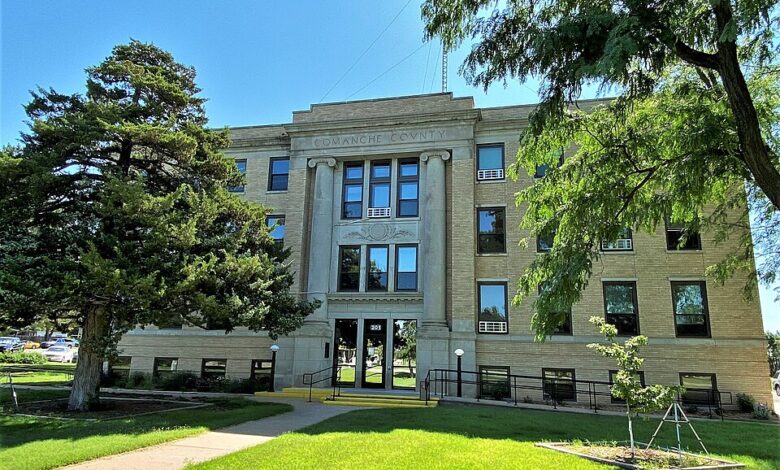
Featured photograph of Comanche County Courthouse by Jon Roanhaus, CC BY-SA 4.0. Resized for display.
