My 6 Year Old Son Gave All His Savings to Help Our Elderly Neighbor The Next Morning Our Yard Was Filled with Piggy Banks and Patrol Cars Were Everywhere
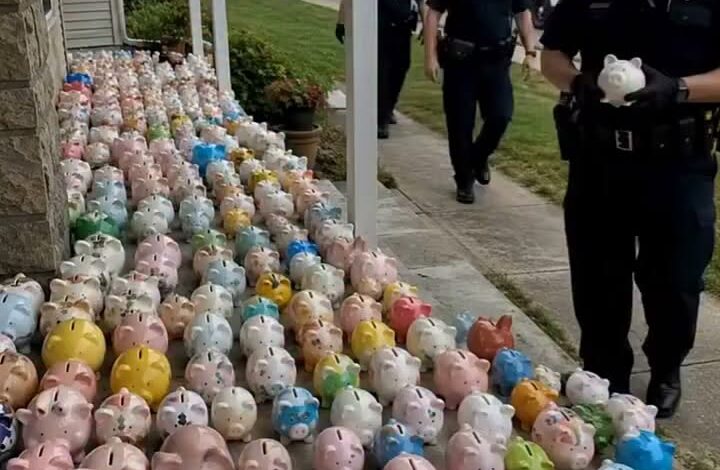
The sirens weren’t for a crime. They were for a six-year-old with a piggy bank. One small act of kindness, one dark porch, and a forgotten woman nobody meant to forget. By morning, patrol cars blocked the street, strangers crowded my lawn, and the truth spilled out of shattered ceramic: our town had been living on her quiet sacrifices for de… Continues…
By the time the last piggy bank was opened, the story had shifted. It wasn’t just about a shut-off notice or an expired card. It was about a woman who had quietly fed a generation, and a town that only realized it when a child refused to look away from a dark porch. Every note, every key, every gift card was a confession: “You saw me when no one else did.”
Watching Oliver press his small hand into hers, I understood what scared me most. It wasn’t that bills pile up or systems fail. It was how easily we let “busy” become an alibi for abandoning the people who once held us up. That morning, we didn’t just turn Adele’s lights back on. We rewired something in ourselves. Kindness, it turned out, was contagious—and my son had started the outbreak.
Oliver had not begun with a plan to draw the neighborhood together. He had noticed a dark house and remembered the woman who brought him butterscotch candies. At six, he understood her situation through something immediate: she was cold, and he had money he could offer. His piggy bank represented a year of small decisions to save. Giving it away meant choosing someone else's comfort over whatever he had imagined buying for himself.
For his mother, the sight of Adele wearing a winter coat indoors made the problem harder to overlook. The house across the street had always been part of their daily view, but familiarity had not told them everything about the person living inside it. A porch without a light could be easy to pass. Oliver treated it as a reason to knock on the door. His concern turned a detail that adults might explain away into a request that demanded a response.
The rows of piggy banks on the porch gave that response a shape the family could not miss. What had started as one child's offering had become a collection of messages and practical help. The objects inside them showed that Adele's life reached further through the town than her quiet house suggested. People remembered what she had given, and they had found a way to answer. Her need had not erased her history of helping others. It had finally brought that history into view.
The morning left Oliver's mother thinking about attention as much as generosity. Money could settle an immediate bill, but noticing a neighbor's absence or a change in routine could reveal the need before it grew worse. Her son had acted because he cared about a particular person. The town's answer showed how that care could travel from one household to another.