Breaking News Ariana Grande Reveals She Has Tested Positive for
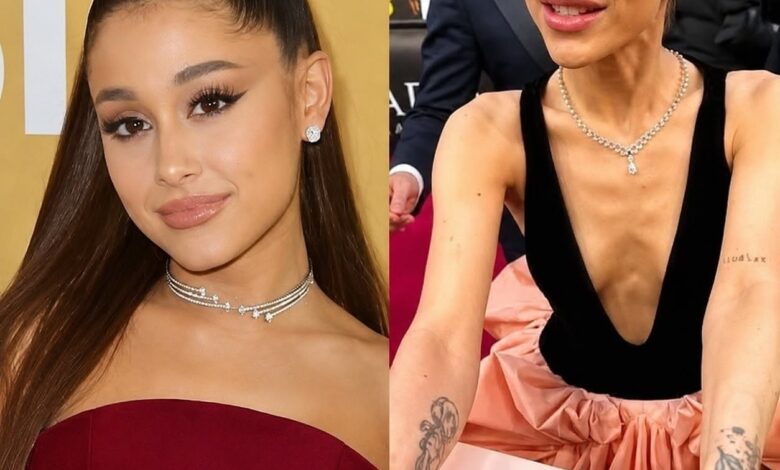
At 4:14 p.m. on an otherwise ordinary Tuesday afternoon, a notification appeared on thousands of smartphone screens. It contained only a few words, but those words were enough to make fans stop scrolling.
“Breaking: Ariana Grande Confirms She Has Tested Positive for…”
The sentence ended abruptly, leaving the most important information hidden behind an invitation to click. There was no clear explanation, no detailed statement, and no immediately visible link to an official announcement. Just a familiar celebrity name, an alarming suggestion, and three dots that seemed to promise a revelation.
Within minutes, screenshots began circulating across social media. Fans shared the headline in group chats, posted questions on discussion forums, and searched for additional information. Some expressed concern. Others demanded to know whether the story was legitimate. A few immediately recognized the familiar structure of online clickbait.
But the headline had already accomplished its most important objective: it had captured attention.
For more than a decade, Ariana Grande has occupied a prominent place in global popular culture. Her music has accompanied millions of personal experiences, from first relationships and heartbreaks to celebrations, difficult moments, and major life transitions. Her distinctive voice, public appearances, performances, and career developments have made her recognizable far beyond the traditional boundaries of the music industry.
For devoted fans, she is not simply another celebrity whose name appears in entertainment headlines. Many feel a personal connection to her work because her songs have become part of their own memories. That emotional attachment helps explain why an alarming health-related headline can spread so quickly.
A rumor about an unfamiliar public figure might receive little attention. A rumor involving someone with an enormous international fanbase can produce an entirely different reaction.
The first wave of responses was emotional rather than analytical. People wanted to know what had happened. They wanted reassurance. Some began searching for the missing words in the headline, while others shared it before discovering whether a reliable source had reported the claim.
That reaction was understandable. Nobody wants to hear that an artist they admire may be experiencing a serious health problem. However, genuine concern can become an advantage for publishers who understand how to manipulate online attention.
The most important question was not simply what the headline suggested. It was whether anyone had actually confirmed it.
A legitimate health announcement involving a major international artist would ordinarily be expected to leave a verifiable trail. Depending on the circumstances, that might include a statement from the artist, an authorized representative, a reliable news organization, or another identifiable primary source.
Yet the viral wording offered no such evidence by itself.
There was a significant difference between a headline claiming that Ariana Grande had confirmed a medical result and an independently verified statement demonstrating that she had done so. The word confirmed carried the appearance of authority, but a website could use that word without providing the documentation necessary to support it.
As the headline traveled from one platform to another, that distinction became increasingly difficult for readers to recognize. A screenshot could be separated from its original website. A short video could repeat the claim without identifying its source. A social media account could quote another account, which had itself copied an unknown publisher.
Eventually, the same sentence could appear in dozens of places, creating the illusion that many independent outlets had reported the same event.
In reality, repetition does not establish verification.
Behind the scenes, the story raised a series of basic questions. Where had the headline first appeared? Was there an original statement? Had a journalist contacted an authorized representative? Was the wording based on an actual announcement, or had a publisher simply attached a celebrity’s name to a sensational phrase?
These questions were essential because the headline concerned personal health information, not an ordinary entertainment update.
The public deserved accurate information, but Ariana Grande also deserved the privacy and dignity afforded to any individual. Those two principles did not conflict. People could care about her well-being without demanding access to private medical details.
As the afternoon progressed, the mystery surrounding the headline became almost as important as the alleged announcement itself.
And that left one uncomfortable question hanging over the entire online conversation: If a headline can make millions of people believe that something has been officially confirmed, even when the evidence is missing, how much power does a single sentence really have?
For a celebrity whose professional life unfolds under constant public attention, privacy can become one of the most difficult things to protect.
Every appearance may be photographed. Every interview can be dissected. A brief absence from social media may generate speculation, while a change in clothing, hairstyle, or public schedule can become the subject of countless online discussions.
For Ariana Grande, whose career has developed across television, music, film, and international entertainment, the attention surrounding her public life is particularly intense.
However, fame does not eliminate the boundary between public information and private medical matters.
A person can be internationally recognized and still retain the right to decide what personal information should be shared. Medical records, diagnostic results, treatment decisions, and conversations with healthcare professionals are not automatically public property simply because someone is famous.
In the United States, the Health Insurance Portability and Accountability Act, commonly known as HIPAA, establishes important privacy protections for health information held by covered healthcare providers, health plans, and certain related organizations. It is important to understand that HIPAA does not impose a universal prohibition on every person discussing medical information, nor does it require celebrities to publish their health records. Its protections apply within a specific legal framework.
The broader principle is straightforward: public recognition does not mean that an individual must surrender personal medical privacy.
Yet celebrity culture often creates expectations that would seem unreasonable in ordinary life.
Fans may want their favorite performers to share everything. They follow career announcements, personal milestones, relationships, performances, and everyday photographs. Over time, this continuous access can create the impression that the celebrity is somehow obligated to explain every absence or unexpected change.
When a public figure becomes less visible, speculation can fill the empty space.
A canceled appearance might be interpreted as a sign of illness. A photograph showing someone wearing a mask could inspire theories about a medical condition. A delayed announcement might be described as evidence of a hidden crisis.
None of these details, considered individually, establishes a diagnosis.
There are countless ordinary reasons why an artist might change a schedule, cancel an appearance, take time away from public activities, or choose not to discuss personal matters. Work commitments, family responsibilities, travel, fatigue, and private circumstances can all influence someone’s availability.
Nevertheless, online publishers sometimes turn ordinary uncertainty into dramatic narratives.
The process can begin with a small observation. Someone notices that a celebrity has not posted recently. Another account finds an old photograph. A third publisher combines those details with an alarming headline. By the time the story reaches a larger audience, the original uncertainty may have disappeared beneath layers of confident language.
The headline about Grande’s supposed positive test followed a structure familiar to anyone who has spent time on social media.
It used the language of an official announcement while providing little visible context. The word breaking suggested urgency. The word confirms suggested certainty. The incomplete sentence encouraged readers to click before they could evaluate the information.
This approach creates an illusion of privileged access.
Readers may feel that they are discovering something that has not yet reached the mainstream news cycle. That feeling can be especially powerful when the subject is a beloved performer.
However, genuine reporting requires more than dramatic wording. It requires identifiable sources, clear context, and evidence that can be examined independently.
An article that claims a celebrity has received a particular diagnosis should explain where the information originated. If the information comes from an official statement, readers should be able to locate that statement. If it comes from a named source, the publisher should explain the source’s relevance and reliability. If the information remains unconfirmed, the article should say so clearly.
Silence from an artist’s representatives should never be treated as proof that a rumor is true.
Representatives may decline to comment for many reasons. They may consider a story too unreliable to deserve a response. They may be protecting their client’s privacy. They may simply have no reason to address every claim circulating online.
The absence of an immediate denial is not confirmation.
This distinction matters because false medical rumors can have consequences beyond temporary confusion. They can create unnecessary distress for family members, friends, colleagues, and fans. They can also encourage invasive speculation about a person’s appearance, behavior, and private decisions.
A public figure’s health should not become an unrestricted subject for entertainment.
The most responsible response to an alarming claim is therefore neither blind belief nor aggressive dismissal. It is patience, source verification, and respect for the individual’s privacy.
But if privacy and accuracy are so important, why do questionable celebrity headlines continue to attract enormous audiences?
The answer lies partly in the economics of the modern internet.
The internet has transformed attention into an economic resource.
Every second, users scroll through an endless stream of videos, photographs, advertisements, entertainment updates, and breaking-news notifications. Publishers compete for a limited amount of attention, and the organizations that attract the most engagement can gain significant commercial advantages.
In this environment, a sensational headline can be more valuable than a carefully researched explanation.
Consider the difference between two possible headlines.
One might say: “No Verified Information Supports a Viral Health Claim About Ariana Grande.”
The other might say: “Ariana Grande Confirms Shocking Health News—Fans Are Worried!”
The first headline communicates uncertainty and encourages careful interpretation. The second creates urgency, emotional tension, and a desire to discover what supposedly happened.
The second may attract more immediate clicks, even if it offers less reliable information.
This is one of the central problems of clickbait.
A headline does not need to provide the answer. It only needs to create enough curiosity for the reader to open the article.
The phrase “See More” is particularly effective because it turns the missing information into an invitation. Readers are presented with an incomplete narrative and encouraged to take another action to resolve it.
The technique resembles a psychological pattern often discussed in connection with unfinished tasks and unresolved information. When people encounter an incomplete statement, they may feel motivated to seek closure.
For example, a headline that says “The Unexpected Reason Ariana Grande Has Fans Worried…” creates an unanswered question. Readers want to know the reason. Even those who suspect exaggeration may click simply to see what the publisher is claiming.
The emotional stakes make the mechanism more powerful.
Health-related headlines can activate fear and concern. Celebrity names add familiarity. Words such as “confirmed,” “urgent,” “shocking,” and “breaking” increase the apparent importance of the information.
When combined, these elements can produce a headline that feels like an emergency even when the underlying article contains no reliable evidence of one.
The commercial incentives are equally important.
Many websites earn money through digital advertising. Depending on their business model, revenue may be influenced by page views, impressions, time spent on a website, or other engagement measurements.
A visitor who clicks a sensational headline may encounter multiple advertisements while scrolling through the article. Some websites divide a short story into several pages, requiring additional clicks to reach the conclusion.
This does not mean that every advertising-supported publisher is dishonest. Advertising is a legitimate way for news organizations to finance their work. The problem arises when commercial incentives encourage publishers to prioritize emotional manipulation over accuracy.
A fabricated or misleading celebrity story can be produced quickly and distributed widely. A properly researched article requires time, editorial judgment, and verification.
That imbalance can create an environment in which unreliable content spreads faster than responsible reporting.
Search engines and social platforms add another layer of complexity. Their recommendation systems use various signals to determine which content users may see. Engagement can influence distribution, although the exact systems differ between platforms and change over time.
When a dramatic headline attracts comments, reactions, and shares, it may receive additional exposure. Some users share it because they believe it. Others share it to criticize it. Still others simply want friends to explain what is happening.
The platform may register all of these actions as engagement, even though the users have very different intentions.
This can create a feedback loop.
A sensational headline attracts attention. Attention produces interaction. Interaction increases the possibility of further distribution. Wider distribution brings more readers, some of whom respond emotionally and share the story again.
Eventually, the original claim can become difficult to trace.
A screenshot might circulate without the article. A video might repeat the headline without linking to the original source. An account might publish a supposed update based on another account’s post.
Each repetition gives the story another opportunity to appear credible.
The situation becomes even more complicated when automated content systems are involved. Modern publishing tools can generate large quantities of text, rewrite existing material, and produce variations of popular search phrases. Artificial intelligence can make this process faster and cheaper.
However, speed is not the same as verification.
An automated article can sound professional while relying on an unsupported claim. It can contain detailed paragraphs, polished language, and confident explanations without providing a single reliable source.
That is why readers should evaluate evidence rather than presentation.
A well-designed website does not automatically make an article trustworthy. A large number of comments does not establish that a claim is true. A photograph does not prove the date, location, or circumstances in which it was taken.
Most importantly, the same claim appearing on several websites does not necessarily mean that several independent investigations have confirmed it. They may all be repeating one original post.
The viral headline involving Ariana Grande demonstrates how easily emotional concern can become part of an attention economy.
The reader arrives looking for information. The publisher may be measuring clicks.
And somewhere between those two intentions, the truth can become the least visible part of the story.
For Ariana Grande’s fans, an alarming health headline is not simply another entertainment story.
Many have followed her career for years. They remember early television appearances, major musical releases, award ceremonies, tours, interviews, and public milestones. Her songs may be connected to important moments in their own lives.
That history creates a strong emotional connection.
When a rumor suggests that something serious has happened to an artist they admire, fans can experience genuine concern. Some may immediately search for updates. Others contact friends or visit fan communities to ask whether anyone has found an official statement.
Within minutes, online spaces can become crowded with competing explanations.
Discord servers, Reddit discussions, Facebook groups, and TikTok comment sections often function as informal information centers during celebrity news events. Fans exchange screenshots, compare headlines, and search for statements from reliable sources.
These communities can be valuable. Members who follow an artist closely may quickly identify recycled photographs, old interviews, misleading quotations, and websites with histories of publishing questionable material.
At the same time, the speed of discussion can make misinformation more difficult to control.
A single unverified screenshot may be reposted hundreds of times. Someone may add an inaccurate explanation. Another user may translate the claim into a different language, unintentionally changing its meaning. Eventually, readers may encounter several versions of the same story without realizing that they all originate from one unsupported headline.
The result is an information environment in which confidence can grow while evidence remains unchanged.
The emotional response can also become intense.
Younger fans, in particular, may have limited experience distinguishing entertainment journalism from fabricated celebrity content. A headline that uses official-sounding language can appear convincing, especially when it is accompanied by photographs and dramatic graphics.
Some users may spend hours refreshing their feeds, searching for reassurance. Others may become frustrated with anyone questioning the story.
This can lead to arguments within fan communities.
One group may insist that the headline must be true because it appears on multiple websites. Another may argue that there is no reliable evidence. A third may accuse the first group of spreading panic, while the first group responds that questioning the report shows a lack of concern.
Such disagreements can quickly become personal.
The problem is that caring about an artist and believing every claim about that artist are not the same thing.
A fan can express support without sharing an unverified medical story. Someone can hope that an artist is healthy without demanding a public explanation. A person can question a headline without disrespecting the performer or the people who are worried.
In fact, responsible skepticism is one of the most useful ways fans can protect the communities they care about.
Several fan accounts have adopted simple practices that help reduce misinformation. They ask members to provide the original source before reposting a claim. They distinguish official announcements from entertainment speculation. They correct old photographs that are presented as new and discourage followers from treating anonymous posts as established facts.
These practices may appear ordinary, but they can make a substantial difference.
A community that refuses to spread unsupported claims becomes less attractive to publishers who depend on emotional reactions to generate traffic.
There is also an important mental-health dimension.
Constant exposure to alarming headlines can produce unnecessary stress. When every celebrity update is framed as a crisis, audiences may begin to experience a permanent sense of digital urgency.
They may feel compelled to check notifications repeatedly, even when there is no meaningful new information. They may become anxious about people they have never met and struggle to separate their own emotional lives from the endless stream of online speculation.
Taking a break from social media is not indifference. It can be a healthy response to an environment designed to compete for attention.
Fans can also remember that artists are human beings rather than characters whose lives must be continuously explained to the public.
Ariana Grande has the right to decide which parts of her personal life she wishes to share. Her supporters can respect that decision while continuing to enjoy her music and celebrate her professional achievements.
Ultimately, the strongest fan communities are not necessarily the ones that react fastest.
They are the ones that know when to pause, check the evidence, and protect one another from unnecessary panic.
But the responsibility does not belong to fans alone. Publishers and social platforms also play a major role in determining whether questionable claims are rewarded or challenged.
The attention surrounding a sensational celebrity headline eventually moves elsewhere.
Another performer becomes the subject of speculation. Another photograph is taken out of context. Another website publishes a dramatic claim that promises an extraordinary revelation if readers click one more time.
The cycle continues because the internet rarely remains focused on a single story for long.
Yet the disappearance of a rumor from public discussion does not mean that the underlying problem has been solved.
The viral headline about Ariana Grande offers a useful opportunity to examine how people can protect themselves from misleading information in an environment where content is produced and distributed at extraordinary speed.
The first step is surprisingly simple: pause before sharing.
When a headline suggests a medical emergency, diagnosis, accident, or personal crisis, readers should resist the pressure to react immediately. Urgent wording is not proof of urgency. A dramatic photograph does not establish that the accompanying story is accurate.
Taking a few moments to investigate can prevent an unsupported claim from reaching hundreds of additional people.
The second step is to identify the original source.
Readers should ask whether the information comes directly from the individual, an authorized representative, a reputable news organization, or a clearly identified source with relevant knowledge.
If an article does not explain where its information originated, that absence should raise questions.
It is also important to distinguish between original reporting and repeated coverage. Several websites may publish similar articles because they are copying the same source. Independent confirmation requires more than multiple versions of identical wording.
The third step is to examine the language.
Certain phrases frequently appear in low-quality celebrity content:
“The shocking truth has finally been revealed.”
“Fans are terrified after this announcement.”
“Doctors are reportedly worried.”
“The hidden diagnosis nobody expected.”
“Click to discover what happened next.”
These phrases are not automatically proof of misinformation, but they often signal that a publisher is trying to create an emotional response before presenting meaningful evidence.
Reliable reporting generally provides specific information. It explains what is known, what remains uncertain, and where the information came from.
The fourth step is to evaluate photographs and videos carefully.
Images can be old, edited, miscaptioned, or unrelated to the event being described. A photograph of a celebrity wearing a mask, for example, cannot establish a particular medical diagnosis.
Likewise, a video showing an artist looking tired or emotional does not prove that the person is experiencing a specific health condition.
Visual material should be treated as evidence only when its origin, date, context, and relevance can be established.
This has become increasingly important as artificial intelligence makes it easier to generate realistic-looking images, alter existing photographs, and create synthetic audio or video.
A convincing image is not necessarily an authentic record of an event.
The fifth step is to understand the difference between confirmed information and speculation.
A responsible article might explain that a claim is circulating but has not been independently verified. It might state that no official announcement has been identified in the material being examined. It should not transform the absence of information into an invented conclusion.
This distinction is especially important when discussing health.
Medical diagnoses are personal and often complex. Even when a celebrity publicly discusses a condition, readers should avoid drawing conclusions about treatment, prognosis, or medical circumstances that the individual has not disclosed.
A person’s appearance cannot reliably establish their health status. Nor should ordinary changes in weight, facial expression, clothing, or public activity be treated as medical evidence.
There is no responsible reason to turn someone’s body into a public diagnostic puzzle.
Publishers also have obligations.
Entertainment websites can attract audiences without manufacturing medical crises. They can report verified career developments, review performances, examine artistic projects, and discuss public statements while maintaining clear boundaries around private information.
If a health-related story cannot be substantiated, it should not be presented as a confirmed announcement.
Corrections should be visible when an article contains inaccurate information. Headlines should accurately reflect the evidence in the body of the article. Images should be captioned honestly, and anonymous sources should not be used to disguise unsupported speculation.
Social media platforms also have a role in improving the information environment. Clear reporting mechanisms, effective moderation, transparent labeling, and better systems for addressing manipulated content can help reduce the circulation of deceptive claims.
However, no platform can completely replace individual judgment.
Every reader participates in the information ecosystem through ordinary actions: clicking, commenting, sharing, saving, and recommending content to others.
A single decision not to repost an unverified headline may seem insignificant. Repeated across a large community, those decisions can reduce the reach of manipulative stories.
For Ariana Grande’s supporters, the most meaningful response to a questionable health headline is not to panic or demand private medical information. It is to seek reliable updates, respect her personal boundaries, and continue supporting her work without allowing an unverified claim to define the conversation.
The same principle applies to every public figure.
Behind a famous name is a real person with relationships, responsibilities, emotions, and a private life. Public attention does not remove the need for compassion.
The internet will continue producing dramatic headlines. Some will report genuine events. Others will exaggerate, distort, or invent information to attract attention.
Readers cannot control every publisher or algorithm, but they can control how they respond.
They can question the source. They can verify the date. They can look for an original statement. They can refuse to confuse repetition with proof. And they can choose not to turn another person’s possible suffering into entertainment.
The most important lesson is that concern should never require abandoning critical thinking.
A headline may be designed to make people click before they think. A responsible reader does the opposite.
Pause. Verify. Respect privacy. Then decide whether the story deserves to be shared.
In an online world where attention is constantly being harvested, truth remains valuable precisely because it requires patience.
And sometimes, the most responsible thing a reader can do is refuse to believe a story simply because it has been written to sound impossible to ignore.