Farewell to a Legend Denzel Washington
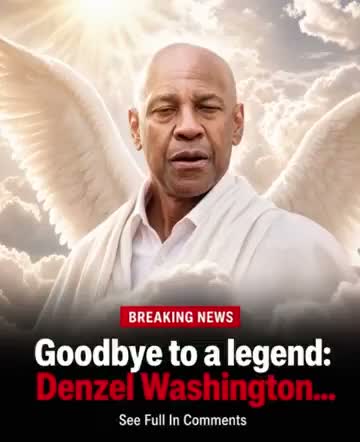
He didn’t just play characters. He invaded them. Every glare, every pause, every whispered line felt like a challenge to anyone watching. This wasn’t acting anymore. It was something far more dangerous, far more human, and it made Hollywood nervous.
The force of a Denzel Washington performance can arrive before he says a word. Watch the time he gives another character to finish speaking. Sometimes his eyes settle on that person and stay there a beat longer than the conversation seems to require. The other actor has to decide whether to fill the silence or live with it. Either choice tells us something about the room, and about the person Washington is playing. By the time he answers, the balance of the scene may already have shifted.
That quality makes it easy to remember the big speeches and overlook the quieter decisions that give them weight. A change in posture, a glance toward the door, or a smile that arrives a little too quickly can tell us how much of a character’s confidence is being put on for someone else. Washington can make a line sound like a genuine attempt to connect and let the next line reveal how much calculation went into it. You can follow the character’s reasoning while still feeling uneasy about where it leads.
The same command of a scene can produce very different effects. A character with authority can use a measured voice to give people around him a sense of safety. Another can use that same calm to let someone know the conversation is moving toward a threat. The distinction comes from whom he watches, how closely he listens, and whether he gives the person opposite him space to answer. The viewer can feel that difference even before the words spell it out.
He also knows what to do with the moment when a confident character begins to lose control. A speech that starts out as a way to persuade someone can become an effort to persuade himself. A joke can buy a few seconds while the character works out whether he has just been exposed. Washington often lets those turns happen without a great change in volume. The words are still coming at the same pace, but the person delivering them has begun to understand the situation differently.
What gives those moments their human quality is the sense that the character has a life outside the scene. You can imagine how he learned to carry himself that way, or why it is so difficult for him to admit that he needs help. Some characters have spent years being rewarded for holding their ground. Others appear to be holding on to the last thing they know how to do. Washington can let those histories register through the way a person sits down across from someone who has finally called his bluff.
The work rewards a second look. Once you know how the confrontation ends, you can see how early the other character tried to warn him, and how long he chose to ignore it. You can catch the difference between a man waiting patiently and a man making someone wait. Those small distinctions explain why the pauses are as memorable as the lines. They let you watch a person decide what to reveal while giving you a chance to see what he would rather keep hidden.