A 7 Month Pregnant Woman Disappeared Into a Louisiana Swamp 5 Days Later Doctors Found the Impossible
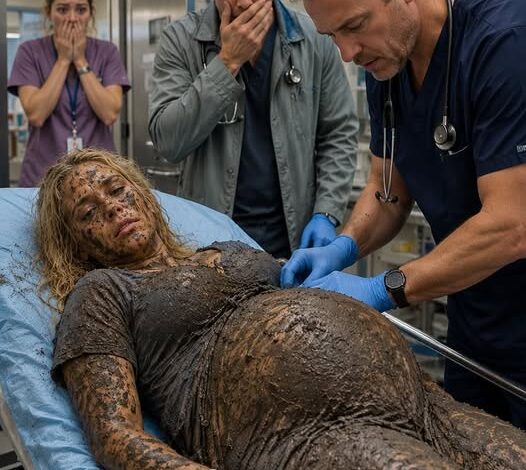
Sarah Bennett was seven months pregnant when her truck slid from a rain-damaged Louisiana road into a flooded marsh. Five days later, rescuers found her dehydrated, feverish and barely conscious. In the emergency room, doctors uncovered a deep wound on her thigh and saw larvae concentrated around damaged tissue. The sight was alarming, but the fictional survival story behind it was about improvisation, endurance and a journey home delayed for sixteen years.
Sarah had worked as a paramedic in hurricanes, floods and remote emergencies. She could keep strangers calm during their worst moments, yet she had never repaired the argument that separated her from her mother, Margaret. At twenty, Sarah had left home after they exchanged words neither could forget. When a neighbor called years later to say Margaret had suffered a stroke, Sarah packed her medical bag and began the drive home.
Heavy rain had turned a rural route dangerous. A fallen tree blocked the road, and tire tracks appeared to curve around it. Rather than lose hours by turning back, Sarah followed them. The saturated ground collapsed under the truck. It slid into a ditch at an angle, and a piece of rusted metal tore her thigh as she climbed out. She cleaned and wrapped the injury, but her phone had no signal and her leg could not support the climb back to the road.
The first night she sheltered inside the truck while rain struck the windows. By the second day, fever had begun. She rationed water and checked her baby’s movement, trying to stay calm. The wound worsened and the surrounding tissue appeared damaged. Drawing on memories from disaster medicine, she made a desperate decision involving larvae present in the environment, hoping they would consume dead tissue while she waited for rescue.
This part of the tale echoes a real clinical practice called maggot debridement therapy, but the controlled treatment used by medical professionals is very different from improvised exposure in a swamp. Clinicians use disinfected larvae of a specific species under carefully managed conditions to remove dead tissue from selected wounds. Attempting anything similar without medical supervision can introduce infection, damage healthy tissue and delay lifesaving care. The story should never be treated as instructions.
Sarah’s absence was noticed when she failed to arrive at Margaret’s home. A neighbor contacted authorities, and search teams retraced her likely route. Flooding complicated the search, but a responder spotted a reflection from the partly submerged truck. Sarah had used a small mirror from her medical kit to signal whenever she heard an engine. The rescue team stabilized her leg and transported her by boat before an ambulance took her to the hospital.
Doctors treated dehydration, infection and the wound while monitoring the pregnancy. Their surprise came from seeing that the larvae appeared mostly in nonviable tissue, but this did not mean Sarah was out of danger. She required surgical cleaning, antibiotics selected by her medical team and close observation. The baby’s heartbeat strengthened as Sarah received fluids and care.
Margaret arrived at the hospital in a wheelchair, her speech changed by the stroke. The reunion was not a magical cure for sixteen years of hurt. Mother and daughter could not erase the words they had spoken. Margaret placed her working hand on Sarah’s, and Sarah apologized for staying away. They agreed to begin with the truth: both had been proud, frightened and waiting for the other to move first.
Weeks later, Sarah left the hospital with her pregnancy continuing under medical supervision. Her recovery involved physical therapy and ongoing wound care. She stayed near Margaret, not because the accident proved fate had ordered it, but because surviving clarified what she no longer wanted to postpone.
The impossible-looking discovery in the hospital was only one part of the story. The greater astonishment was that Sarah endured five days injured and pregnant, remained alert enough to signal rescuers and accepted the help she needed afterward. Her expertise helped her make decisions under pressure, but rescue and professional medicine saved her. Courage, the tale suggests, is not doing everything alone. Sometimes it is staying alive long enough to come home.