Three Weeks After My Husband Died His Sisters Tried to Take Our House and Exposed Their Scheme
Three weeks after Laura buried her husband, Michael, she was still living inside the strange routines of grief. Each morning she poured two cups of coffee before remembering that only one person remained at the table. His glasses stayed on the nightstand, and the motorcycle they had restored together remained beneath a tarp in the garage. Before he died, Michael had asked her to promise that she would never leave their home.
The house represented twelve years of marriage. Laura and Michael had painted its walls, planted the maple tree out front, and built a family there. Yet Michael’s three sisters had barely visited during his final months. One called mainly to ask about the will. At the funeral they occupied the front row, cried publicly, and left before the reception.
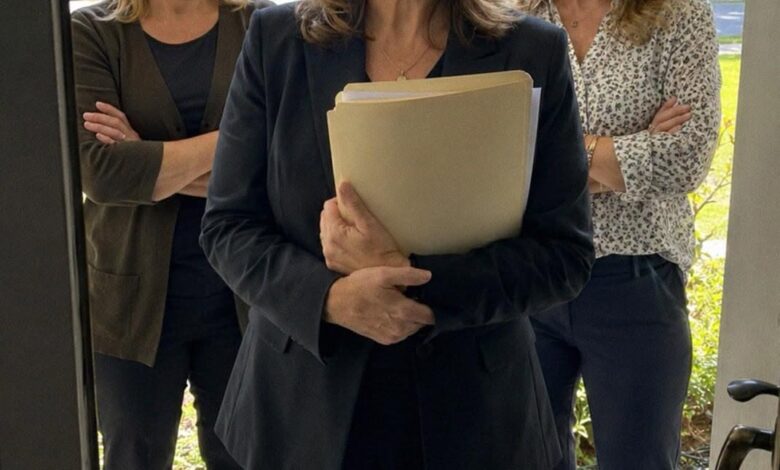
Then the sisters appeared on Laura’s porch wearing black coats. Rhonda, the most forceful of them, carried a folder from a law office. She marched inside and inspected the rooms as if preparing an estate sale. She announced that the house should be sold so Michael’s family could receive what was “fair.” Laura replied that the property was hers and not part of the estate, but Rhonda warned her not to get comfortable.
Frightened, Laura searched Michael’s study. She found the deed, a survivorship affidavit, and a notarized letter. Years earlier, Michael had quietly completed every document needed to ensure that the house belonged solely to Laura. Relief quickly turned into suspicion. If the sisters could not legally take the home, why were they so determined to gain access?
The next day they returned with a casserole and false concern. While one cried, the others drifted toward the basement and garage. Laura caught Rhonda examining Michael’s tool chest and another sister digging through storage boxes. She ordered all three to leave. Their lack of protest made the visit even more disturbing.
Rhonda soon came back with a cash offer worth barely half the property’s value. When Laura refused, she issued a chilling warning about how difficult it might be to live alone in an old house with strange noises at night. Soon afterward, lights flickered, the garage door opened by itself, and Laura heard Michael’s voice call her name from the hallway.
Grief made Laura doubt her senses until she noticed physical evidence: shifted boxes, an open cabinet, and a workbench wiped clean. She called her son, Daniel. He changed security codes and installed cameras while intentionally leaving one old side-door lock unchanged. If the sisters still had Michael’s emergency key, the cameras would show it.
Two nights later, the recording revealed everything. Rhonda and a sister entered after midnight, searched the motorcycle and garage, interfered with the electricity, and placed a hidden speaker in a closet. Rhonda pressed a button, and Michael’s recorded voice said Laura’s name. They had taken audio from old family tapes and used it to make a grieving widow question her mind.
The discovery transformed Laura’s fear into resolve. She and Daniel preserved the footage and confronted the sisters with evidence of trespassing, harassment, and attempted manipulation. The house had never been theirs to claim, and their intimidation could no longer be dismissed as a family disagreement.
Michael’s careful paperwork proved to be his final protection. More importantly, Laura learned that grief did not make her powerless. With her son beside her and the truth recorded, she defended the home she and Michael had built. His sisters arrived expecting an isolated widow they could frighten. They left facing the consequences of a scheme that exposed their greed instead.
Her promise to remain in the house was ultimately not a burden but a source of strength, grounded in legal preparation and shared memory.