Kissing the Deceased: A Doctor’s Warning Sparks Debate on Tradition vs. Safety
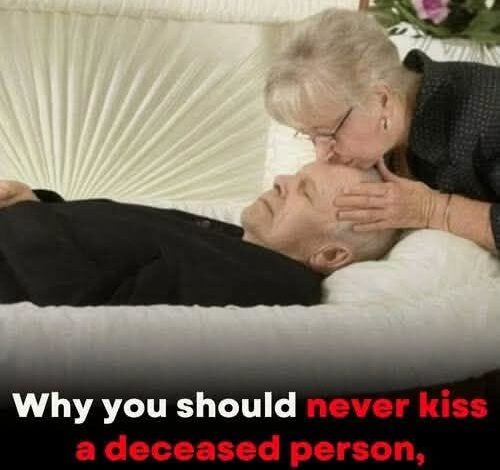
For many families, touching or kissing a loved one after death is part of saying goodbye. A kiss on the forehead, a hand held for the final time, or a quiet moment beside the body can make an unbearable loss feel real. These gestures appear in religious customs, family traditions, and funeral practices around the world. They are not casual acts; they carry affection, respect, and the need for closure.
A medical warning about kissing the deceased therefore touches a sensitive subject. It can sound cold or unnecessarily alarming when relatives are already overwhelmed by grief. However, the concern is not that every dead body is dangerous. In most ordinary circumstances, brief contact with intact skin presents little risk. The important issue is the cause of death, the condition of the body, and whether an infectious disease may still be present.
Death stops circulation and breathing, but it does not instantly destroy every virus, bacterium, or other pathogen in the body. Certain infections can remain viable for a period after death, especially in blood, respiratory fluids, or damaged tissue. Risk may be higher when the person died from a serious communicable disease, when fluids are leaking, or when the body has not yet been prepared by trained funeral professionals.
Direct contact with the mouth, nose, eyes, or an open wound deserves particular caution because these areas provide routes into the body. A person with cracked lips, cuts on the face, weakened immunity, or a recent surgical wound may be more vulnerable. Children, pregnant women, older adults, and people receiving treatments that suppress the immune system may also need stricter guidance depending on the infection involved.
Funeral-home staff use protective measures because they may handle many bodies and encounter blood or bodily fluids during preparation. Their gloves, disinfectants, ventilation procedures, and professional protocols do not mean a family must fear normal proximity. They show that risk is managed by understanding how infection spreads. Relatives should tell funeral professionals about any known contagious illness and follow the instructions given by medical or public-health authorities.
When the cause of death is not infectious and the body has been properly prepared, families may be allowed to touch or kiss their loved one according to local policy. The funeral director can explain what is safe. If there is uncertainty, asking directly is better than relying on frightening claims online. Advice may differ for tuberculosis, viral hemorrhagic fevers, certain meningococcal infections, severe respiratory diseases, or cases involving contamination.
A restriction on physical contact can feel like another loss, but saying goodbye does not depend on one gesture. A family can sit beside the body, speak aloud, pray, place a flower nearby, read a letter, play meaningful music, or touch the casket. Some people choose to kiss their fingertips and place the kiss on a photograph or personal object. These acts preserve the intention of the farewell while respecting necessary safety limits.
Culture and faith remain important in these decisions. Health professionals should communicate with sensitivity instead of dismissing a ritual as irrational. Families are more likely to accept precautions when the reason is explained clearly and alternatives are offered. Religious leaders can also help adapt a ceremony without stripping it of meaning. Safety and tradition do not have to be treated as enemies.
It is equally important not to spread the idea that all contact with a deceased person is automatically hazardous. Such claims can create shame in families who touched their loved one and can intensify fear during grief. Risk depends on specific circumstances, not on death alone. A qualified professional who knows the medical history and preparation of the body is in the best position to advise the family.
The debate ultimately requires both compassion and accurate information. A final kiss may be profoundly important, but love does not demand that a person ignore a genuine infection risk. When contact is considered safe, families should be able to follow their customs without unnecessary fear. When it is not, a carefully chosen alternative can still express devotion. The meaning of the farewell comes from the relationship and the memories that remain, not solely from physical contact in the final moment.