The Silence After the Encore: How a Mother Reclaimed Her Life After Losing Her Muse to a Sudden Shadow
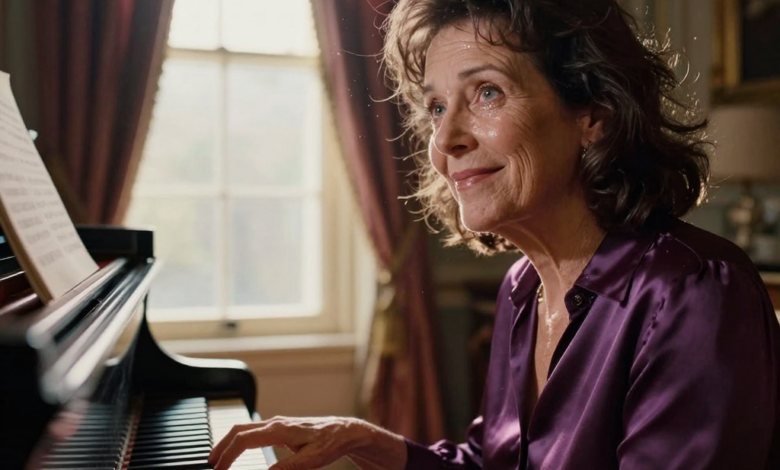
Eleanor Vance had built her entire identity around Clara. For nearly three decades, she was the steadfast anchor in Clara’s tempestuous sea—the grounding force against brilliant chaos. Eleanor wasn’t a starlet; she was the architect behind the artistry. While Clara dazzled on stage with her incandescent soprano voice, weaving narratives of impossible heartbreak and defiant joy into every aria, Eleanor was the steady hand tuning the antique piano, the quiet presence perfecting the costume drape, the unwavering belief humming just beneath the surface of every soaring note. They were a perfect duet: one breathtakingly loud, the other profoundly resonant.
Their life in the old Victorian house on Willow Creek Lane wasn’t gilded; it was beautifully worn. Sunlight fell through tall, slightly grimy bay windows, illuminating dust motes dancing above stacks of annotated scores and discarded velvet shawls. This was their sanctuary. And this is where the unbearable quiet began.
Clara, at thirty-four, burned too brightly for her own good. Her passion wasn’t a gentle flame; it was an inferno. She lived in the anticipation—the next sold-out night, the critical review praising her ‘unearthly vulnerability,’ the applause that felt less like sound and more like physical adoration washing over her. Eleanor loved this fire fiercely, yet she perpetually worried about the fuel tank emptying too fast.
“El, darling,” Clara would murmur late at night, draped across the chaise lounge in a silk dressing gown the color of bruised plums, “do you ever feel… tired of being perfect?”
Eleanor, usually sketching architectural blueprints for their next stage design, would pause her pen. She wouldn’t look up immediately. “Perfect? Nonsense, my wild thing. You are magnificent. A glorious, untamed storm.”
“No,” Clara insisted, twisting the heavy silver locket—the one Eleanor had given her on graduation day—between her fingers. “I mean *tired*. Like holding a perfect note for too long; your throat begins to ache from the sheer effort of sustaining the beauty.”
“Then let it ache,” Eleanor would counter, finally meeting those deep, sea-green eyes that held galaxies of emotion. “It means you’ve given everything you have. It means you *lived* the song.”
Their connection was cemented in shared rituals: the precise way Eleanor made Clara’s morning coffee—strong, black, with a single, perfect sprig of rosemary; the way they would sit side-by-side during matinees, not speaking unless absolutely necessary, content simply to exist in synchronicity; the quiet, conspiratorial laughter that only blossomed when they were alone after a grueling rehearsal.
Then came the Tuesday in late October. A Tuesday usually reserved for polishing the crystal vases and reviewing promotional flyers. Clara was supposed to be practicing the difficult high C of Act Two’s centerpiece aria—the one that felt like her soul ripping free into the rafters. Eleanor found her in the main parlor, leaning over the grand piano, a sheet music stand precariously balanced before her.
Clara wasn’t singing. She was staring at the keys, her hand hovering just above them, trembling minutely. Her breathing sounded shallow, hitched, like an engine running too hot under extreme stress.
“Clara? Sweetheart, what is it?” Eleanor approached slowly, mindful of disturbing the fragile tableau.
Clara flinched, finally turning her head. The vibrant energy that usually crackled around her seemed to have been momentarily sucked out, leaving behind a shell of exquisite porcelain. “El… I don’t think… I don’t think my lungs are cooperating today.” Her voice was barely a breathy whisper, stripped entirely of its usual vibrato.
Eleanor rushed forward, placing a warm, firm hand on her daughter’s shoulder, feeling the feverish heat radiating through the fine silk. “Let’s get you to the sofa. Breathe with me. In… hold… out.”
They settled onto the plush velvet seating. Eleanor began guiding Clara’s breathing—deep, rhythmic inhalations, slow, controlled exhalations. But even as the rhythm was established, a creeping dread, cold and viscous, started pooling in Eleanor’s own chest. It wasn’t just fatigue; it was cessation. This felt like an intermission that refused to end.
Days blurred into a monochrome sequence of doctor visits, hushed phone calls, and sterile hospital smells mingling with the familiar scent of Clara’s jasmine perfume. The diagnosis was swift, brutal, and utterly unfair: acute pulmonary inflammation, exacerbated by stress, demanding immediate, aggressive intervention.
The initial prognosis was cautious optimism. They were fighting. Eleanor would sit vigil at the bedside, tracing patterns on Clara’s cool hand—the curve of her knuckles, the faint indentation where their intertwined rings met. She poured all the unspoken anxieties into that touch.
“You have to fight this for me, my love,” Eleanor murmured one night, leaning close so her breath feathered over Clara’s ear. “Not for the reviews, not for the applause. Fight for Willow Creek Lane. Fight for the rosemary coffee. Fight because you are magnificent.”
Clara managed a weak squeeze back, her eyes fluttering open—those brilliant green pools filled with exhaustion and something akin to profound sadness.
“El…” The word was cracked, fragile as blown glass.
“I’m here. Always here.”
But the fight demanded more than willpower; it demanded reserves, and those seemed alarmingly low. The doctors started using words like ‘critical,’ ‘deterioration,’ and ‘unstable.’ Eleanor stopped sketching blueprints; she started cataloging memories—the day Clara first hit a perfect high C that made Eleanor drop her pen, the disastrous but hilarious rehearsal where Clara accidentally swapped her vocal coach’s reading glasses for his own, mistaking them for conductor’s spectacles.
Then came the evening of the major intervention. The room was hushed, lit only by the soft glow of a bedside lamp casting long shadows across the pale blue hospital sheets. Eleanor held Clara’s hand; the grip was alarmingly slack. A surgeon entered, his face grave beneath the surgical mask. He didn’t need to say much. His silence carried more weight than any dramatic pronouncement.
“The procedure went well,” he began, his voice low and steady. “But… she’s still fragile. We are managing the inflammation, but her reserves are depleted faster than anticipated.”
Eleanor felt a sudden, icy plunge in her stomach. This was not a temporary lull; this was the beginning of the long, agonizing descent.
The next week was torture measured in heartbeats. Clara would drift in and out—moments of lucid conversation punctuated by stretches where she seemed utterly adrift in a sea of quiet pain. Eleanor clung to these moments like life rafts. One afternoon, during a brief period of clarity, Clara managed to whisper something that pierced through the fog.
“The… the scent,” Clara mumbled, her voice barely audible above the steady *beep-beep* of the monitor. “It smells like rosemary and dust.”
Eleanor blinked back a sudden flood of tears. The tiny detail—her signature aroma in the house—was pulling her back to reality. “Yes, darling. It does. That’s our home breathing.”
“And… you,” Clara managed, weakly reaching out until Eleanor gently guided her hand closer. “You are my quietest song. The perfect accompaniment…”
The conversation drifted toward the inevitable. Death, it seemed, was not a sudden shockwave, but a slow, creeping tide.
One rainy Thursday morning, the hospital room felt strangely weighted down, saturated with unspoken goodbyes. Eleanor hadn’t slept properly in days. She sat by the bedside, holding Clara’s hand, watching the rise and fall of her chest, mapping out the terrain of her beloved daughter’s fading life.
Clara stirred slowly, a faint smile playing on lips that looked suddenly too pale, too delicate for the powerhouse they were. Her eyes focused, locking onto Eleanor’s face with startling intensity—a look that conveyed decades of shared history, triumphs, and unspoken vulnerabilities all in one piercing gaze.
“El…” Clara began again, her voice gathering a minuscule reservoir of strength. This time, it wasn’t just a whisper; it was a melodic fragment, the first true note of an aria sung in weakness.
Eleanor leaned in, every nerve ending alight with terrifying hope. “Yes, my angel? Say it. Give me one more perfect note.”
Clara took a ragged breath that seemed to cost her dearly. She looked past Eleanor, towards the window where the rain hammered against the glass, and then, her gaze drifted back, softening into an oceanic depth of love. The single word emerged, rich with all the beauty she possessed, fragile yet utterly resolute: “Home.”
It was more than just a word; it was a final chord, the culmination of their entire shared symphony. It encompassed Willow Creek Lane, the rosemary scent, Eleanor’s steady presence, the years of fierce devotion—it was *everything*.
And as those last syllables faded into the sterile air, Clara’s hand went utterly limp in Eleanor’s grip. The faint monitor beep seemed to lengthen, stretching into an endless, resonant hum. The light in those green eyes did not dim; it simply settled, achieving a perfect, luminous stillness. The fight was over. The music had reached its final, breathtaking crescendo, and now, only the echo remained.
The grief that followed wasn’t a single tidal wave; it was an entire ocean flooding into their lives. It washed away the polished facade of Eleanor’s life, leaving her utterly raw, exposed on the shores of unbearable loss. The applause sounded distant, muffled by cotton wool in her ears. The perfectly tuned piano suddenly felt like a beautiful, mocking relic.
For months, Eleanor moved through the house as if wading through deep water. She couldn’t bring herself to fully inhabit it, lest she wake up and find Clara’s radiant presence dissolved into mist.
She avoided the stage lighting, the velvet seats, the demanding schedules. The world insisted on its schedule; they demanded her participation. Her agent kept calling: *“Eleanor, darling! The gala is next week! You must shine!”*
But Eleanor could only manage a hollow nod, the energy required to fake grace feeling insurmountable.
One afternoon, a local music student—a young man named Thomas, full of clumsy enthusiasm and genuine respect for Clara—found her in the parlor. She was sitting at the piano, not playing, just resting her fingers on the keys, staring blankly at the score for Act Two’s aria.
“Mrs. Vance?” he ventured softly, afraid to startle the profound quiet around her. “May we… may we play it? Just a little?”
Eleanor didn’t move. Her throat felt tight, like a string pulled too taut.
Thomas waited, respecting the sanctity of her sorrowful silence. Finally, he gently pressed the keys for the opening notes. The sound was magnificent—bright, soaring, exactly as Clara had perfected it.
Eleanor closed her eyes. For a fleeting second, she saw not the sterile hospital room, but the sunlit parlor in their house, seeing herself reflected in Clara’s delighted gaze.
Thomas continued, his playing gaining confidence, mirroring the way Eleanor felt herself beginning to stir from the depths of her despair.
Then, Eleanor lifted a hand. Her fingers moved—hesitantly at first, like shy explorers charting unknown territory—onto the ivory keys. She didn’t try to match Clara’s power immediately; she started with the quiet underpinning, the sustained cello notes that anchored the vocal melody.
She played the rhythm of the life they shared: slow, deliberate, heartbreakingly beautiful.
As Thomas built the melodic structure, Eleanor joined in, weaving counter-melodies—a low, soulful harmony beneath Clara’s presumed soaring line. It wasn’t a performance; it was an act of communion.
When the piece reached its climax—the moment where Clara’s voice would have shattered the air with pure emotion—Eleanor didn’t just play the notes; she *felt* them through her fingertips, channeling the memory of her daughter’s vibrant spirit directly into the wood and ivory. She poured all the unsaid goodbyes, the lingering anxieties, and the overwhelming tide of love into that single, perfect sonic expression.
When Thomas finally allowed the final note to decay into silence, a long, beautiful resonance filling the room, Eleanor didn’t collapse in sobbing relief. Instead, she felt a deep, profound settling—the exhaustion was still there, but it was now wrapped in a blanket of bittersweet peace.
She opened her eyes. They were wet, yes, but they weren’t shadowed with emptiness anymore. They held the faint, golden warmth of sunlight breaking through clouds.
“It’s… it’s not just a song,” Eleanor whispered, reaching out to gently touch Thomas’s forearm. “It is the sound of her breathing. It is the memory of her spirit.”
Thomas stared at her, awe washing over his youthful face. He understood then that grief was not about erasure; it was about transmutation.
Eleanor Vance didn’t stop there. She didn’t just return to accepting invitations; she began curating them. She started telling people—with a quiet dignity that eclipsed any stage monologue—about the rosemary scent, about Clara’s laugh when Eleanor misplaced her reading glasses, about the absolute certainty of their bond.
She transformed from a grieving anchor into a living monument. She performed again, but the performances were different. They weren’t exhibitions of skill; they were tributes to memory. When she sang, she didn’t try to *be* Clara; she became the conduit through which Clara shone brightest.
In the finale of her latest run at the Grand Opera House, Eleanor reached the final, sustained note—the high C that always seemed too difficult for Clara to sustain perfectly in those moments of exhaustion. This time, however, the note didn’t waver; it held, pure and strong, resonating through the packed house until it seemed to shake the very rafters.
And as the final, magnificent vibration died away, Eleanor Vance opened her eyes. She saw thousands of faces turned towards her—faces etched with their own experiences of loss, holding their own fragile silences, waiting for the emotional resolution. And in that shared moment of absolute stillness, she didn’t feel alone. She felt connected to every soul who understood the devastating power of a love so complete it becomes its own eternal composition.
She bowed her head slightly, not in defeat, but in profound acknowledgment. The quiet song had found its loudest voice, and Eleanor was finally home within it.