The Ghost of Seven Years: How My Daughter’s Homecoming Unveiled The Poisoned Secret Within Our Family
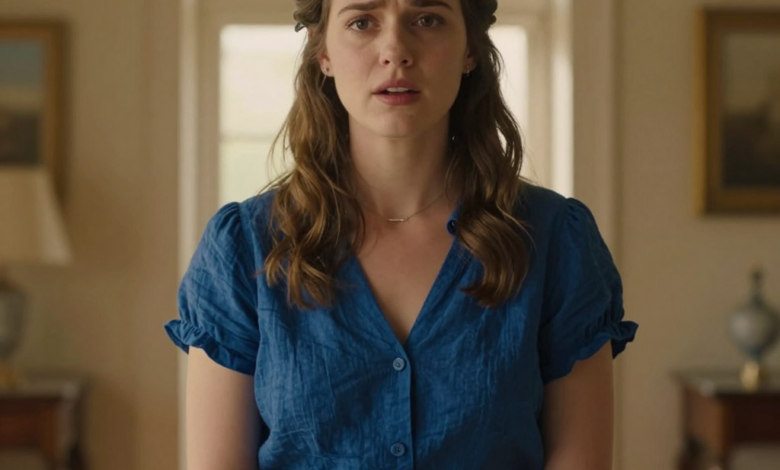
The front porch swing had always been our sanctuary. It creaked a familiar, melancholic rhythm under the weight of expectation—the anticipation of Sarah’s return. For seven years, that swing had hosted only echoes: the ghosts of childhood laughter, the phantom scent of her favorite jasmine perfume, and the heavy, suffocating blanket of unspoken resentment. Seven years since she vanished without a trace, swallowed by some unnamed wilderness of ambition or despair. Seven years our pristine, seemingly perfect suburban life—the manicured lawns, the flawless PTA meetings, the quiet nods across dinner tables—had been built upon her absence.
My wife, Eleanor, had calcified into a monument of grief; her beauty hadn’t diminished, but it had become exquisitely preserved, trapped under a veneer of polite resilience. My son, Thomas, now twenty-two and burdened with an early sense of profound responsibility, treated the swing like a shrine, occasionally sitting there just to whisper updates about his university life into the humid summer air.
But me? I was the architect of the silence. I was the keeper of the narrative: Sarah didn’t leave because she was restless; she left because she needed ‘space’ from our suffocating perfection. The unspoken implication, the subtle barb that stung every time we gathered—it was always aimed at her perceived weakness, her inability to seamlessly integrate into *our* curated existence. We mourned the loss of Sarah, but perhaps more fiercely, we grieved the failure of ourselves as a unit.
The news arrived on a Tuesday, delivered not by a frantic call or a tearful video message, but by a terse email from a university registrar: ‘Sarah Hayes has officially resumed enrollment.’ The words hung in the air of our kitchen like smoke—heavy, undeniable, and utterly disruptive. Eleanor dropped the heirloom silver serving spoon she was polishing; it landed with a shockingly loud clatter against the marble counter, shattering the practiced composure of her grief.
“She’s coming back,” she breathed, her voice reedy, brittle. “Home.”
Thomas paused mid-scroll on his tablet, lifting his head so fast he almost strained his neck. A slow, uncertain smile spread across his face—a genuine fissure in the façade of our sorrow.
But I saw it before him. Beneath that fragile hope, lurking like a predator coiled in the long grass, was something else: apprehension. Fear. Relief mingled uneasily with a sharp, defensive territoriality. We had all spent seven years perfecting our roles—the grieving matriarch, the dutiful son, the stoic father—and Sarah’s return threatened to unseat the entire hierarchy.
When she walked through that oak door two weeks later, smelling faintly of old leather and distant city rain, the transformation was immediate. Gone was the hesitant girl who had packed her bags; in her place stood a woman forged by seven years of solitude—sharp-eyed, beautifully weathered, wearing clothes that suggested purpose rather than passive acceptance. Her eyes, once wide and perpetually searching, now held a deep, unsettling knowledge.
“Hello,” she said, the word quiet, yet it possessed the resonance of a perfectly tuned cello note. It stopped us all mid-motion.
Eleanor rushed forward first, engulfing Sarah in an embrace so fierce it felt like a desperate attempt to pull her back across the threshold and into the known safety of our life. Thomas joined, his earlier skepticism melting away into overwhelming relief. But when their hands settled on Sarah’s shoulders, my grip tightened instinctively around her elbows, pulling her close enough for me to smell that familiar jasmine mixed with something new—something metallic, like old secrets.
The reunion was perfect on the surface. The tears flowed exactly as they should; the hugs lasted precisely as long as necessary. Yet, that night, curled up in the guest room Sarah had claimed as her own sanctuary, the pretense began to fray at the edges.
“You look… magnificent,” Eleanor whispered into Sarah’s hair during dinner on Sunday. “Like you stepped out of a storybook.”
Sarah managed a small, wry smile. “The book has been written in harsh ink, Mother. It’s not entirely gilded.”
The conversation drifted through safe waters—her classes at the local college, her brief stints working in tiny art galleries, her newfound insistence on learning to sail. We asked the benign questions; we offered the practiced compliments. But Sarah answered them with precision, always steering the narrative back toward herself, subtly asserting ownership over her own timeline.
Thomas pushed harder one evening, fueled by his youthful need for validation. “What was it like out there, Sarah? Was it… liberating? Did you finally find what you were looking for?”
Sarah looked at Thomas, and the warmth in her eyes faltered, replaced by something akin to pity mixed with profound weariness. “I found a lot of things, Tom. Some wonderful treasures, some beautiful ghosts. But mostly, I found out exactly who was holding the map.”
The temperature in the room seemed to drop five degrees. Eleanor froze, fork halfway to her mouth. Even my carefully constructed composure cracked slightly around the jawline.
“Holding the map of what?” Thomas prompted, leaning forward, captivated by the shift in dynamic.
Sarah finally looked at me. Her gaze didn’t waver; it felt less like a look and more like an audit—a comprehensive review of every glance I had given her over seven years.
“The map to *this*,” she said, gesturing around the dining room, encompassing Eleanor’s perfectly set table, my slightly too-rigid posture, Thomas’s hopeful eagerness. “The map to this perfect little cage you all built for me.”
The next few weeks were a slow, deliberate dismantling of our narrative. Sarah didn’t scream or throw plates; she employed surgical precision. She questioned the choices we had made in her absence. Eleanor gently probed why she hadn’t called more often during those first three years (when the grief was acute). Thomas challenged my assumption that her departure was purely about ‘artistic yearning.’
“You never quite believed it was enough, did you?” Sarah murmured to me one rainy afternoon as we stared out at the perpetually weeping maple tree. “That I could simply decide to be content with a small life? With *your* definition of success?”
The accusation landed like a physical blow. It wasn’t about her wanting to leave; it was about us not having trusted her enough to stay.
It culminated during the anniversary dinner—the night Eleanor had almost dropped the silver spoon seven years prior. The wine flowed, attempting to smooth over the rising tension, but Sarah seemed immune to soothing liquids.
“You all talk about my wandering,” she began, swirling the deep ruby liquid in her glass, “but you never address the reason I ran *toward* the wanderer.”
My throat tightened. This was it. The pre-programmed moment of revelation. Eleanor gripped my arm so hard her knuckles turned white.
“Sarah,” I managed, my voice husky, forcing myself to meet her gaze squarely. “You were searching for authenticity. We respected that need. We just… missed you.”
“Respecting it was convenient,” she countered, the sarcasm dripping like expensive molasses. “Because admitting why I needed to run meant admitting that *you* all weren’t enough. Or rather, that one of you wasn’t enough.”
She paused, letting the weight of that single sentence settle heavily over the room. Thomas looked terrified; Eleanor was staring at her with a mixture of hurt and dawning understanding.
“When I left,” Sarah continued, her voice gaining strength, rising from a whisper to a clear declaration, “it wasn’t just restlessness driving me away. It was something being actively poisoned here.” She turned slowly, deliberately, until she was facing Eleanor directly. Her expression shifted—the tiredness vanished, replaced by a sharp, undeniable clarity of judgment.
“It was the silence,” Sarah accused her mother. “The way you masked your disappointment with relentless cheerleading. The way Father never let me forget that my choices were inherently flawed compared to Thomas’s predictable trajectory.” She pivoted to Thomas, her gaze softening slightly before hardening again. “And Thomas? You didn’t mourn a lost daughter; you mourned the loss of the *perfect accessory* for your future narrative.”
She then turned to me, finally giving me the full weight of her scrutiny. My breath hitched. This was beyond critique; this felt like an indictment.
“And Dad,” she said, taking a slow step toward my chair, leaning in so only I could hear the next words over the low hum of conversation. “You didn’t just let me leave because you wanted me to grow up. You sent me away because you feared what would happen if I stayed and showed that your perfect structure was actually built on one small, foundational lie.”
The silence that descended after that final accusation wasn’t mournful; it was explosive. It vibrated in the crystal glasses, tightened the muscles in Eleanor’s jaw until she looked carved from porcelain, and froze Thomas mid-sip of his water.
“What… what lie?” I choked out, my carefully constructed defense crumbling to dust around my ankles.
Sarah smiled then—a slow, devastating bloom that held zero warmth but immense power. “The one about your devotion,” she whispered, her eyes locking onto mine with the terrifying intensity of a hawk spotting its prey. “The unwavering belief that *your* bond was unbreakable. Because while you were all busy polishing the picture frame of our family life, Father, you were quietly rearranging the canvas to hide the fact that…”
She trailed off, allowing me to lean in, desperate for the final blow, the truth she had hoarded for seven agonizing years, the secret weapon she wielded against us. The room held its breath, waiting for her to expose the rot at the heart of our gilded cage—the unforgivable betrayal that made all our shared memories feel like carefully curated lies…