The Dust of Decades: What My Aunt Found Hidden Inside the Attic Safe That Changed Our Entire Family’s Story
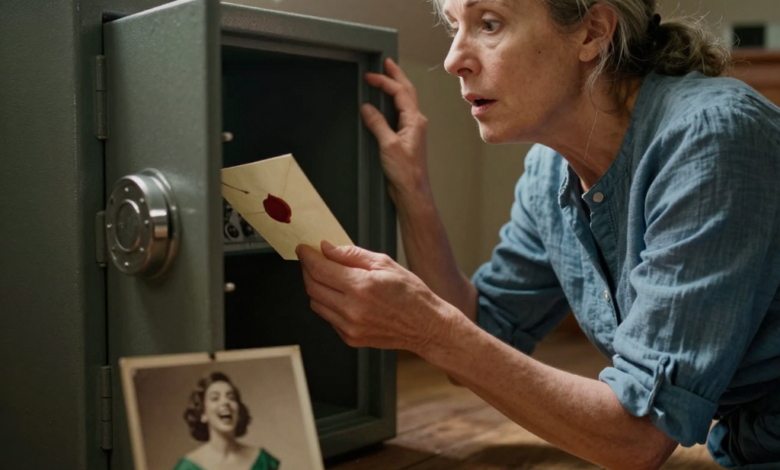
The air in Grandma Elara’s attic always felt different. It was thick, heavy—a tangible mixture of aged cedar, mothballs, dried lavender sachets, and the faint, sweet decay of forgotten joy. For years, it had been a sacred, untouchable space, the repository of generations. My Aunt Beatrice, bless her fiercely pragmatic soul, treated the attic like a museum exhibit: admire from a respectful distance, don’t touch unless absolutely necessary. Her routine was fixed: Tuesdays were ‘Attic Inspection Day,’ where she’d carefully catalog dusty heirlooms—faded lace doilies, brittle photo albums tied with frayed ribbon, and stacks of yellowed correspondence penned in elegant, looping script.
Me? I treated the attic like an archaeological dig. I was obsessed with the secrets trapped beneath the eaves, whispering tales of lost fortunes, clandestine romances, and youthful indiscretions that had been buried beneath layers of forgotten linen. But even my relentless prying hadn’t reached *it*. The safe.
It wasn’t grand, not like the imposing iron beasts you see in old movies. This one was smaller, squat, made of dull, olive-green metal, tucked almost shyly behind a towering wardrobe stuffed with Elara’s wedding gowns. It looked utilitarian, forgotten, yet it exuded an aura of profound importance—a silent sentinel guarding a weighty secret. Beatrice had always pointed at it, her brow furrowed in that way that suggested deep internal debate, and muttered, “That thing holds the hinge upon all our stories.”
This past Tuesday, however, felt different. The humidity was unusually high, making the wood warp slightly, releasing a deeper, almost musky scent. Beatrice had decided today was the day for radical decluttering, meaning everything—yes, *everything*—was coming out into the relative light of the attic floorboards. She wrestled the massive wardrobe aside with a grunt that sounded suspiciously like awe, and there it was: the olive-green safe, catching a single shaft of afternoon sun filtering through a grime-streaked dormer window.
“It’s time, darling,” she breathed, wiping a smudge of dust from its surface. “Time to see what ghosts decided to pack away.”
The lock was an old tumbler mechanism, stiff with age and neglect. Beatrice retrieved a heavy brass key from her apron pocket—a key so intricately detailed it looked like miniature filigree—and inserted it. There was a satisfying, loud *clunk* as the tumblers aligned. She paused, her hand hovering over the cool metal door, her knuckles white, before slowly, deliberately, turning the handle.
The hinges groaned in protest, a sound that felt louder than any thunderclap. The heavy door swung inward just enough for Beatrice to peer into the darkness within. A faint scent, sharper than mothballs—vanilla mixed with old paper and something metallic, like dried roses—wafted out.
“Well?” I prompted, breathless, already leaning in so close my nose almost brushed the cool metal lip of the safe. “What have you found? Gold? Deeds to a small coastal property? A declaration of undying love written on parchment?”
Beatrice didn’t answer immediately. Her usual crisp composure seemed momentarily fractured; her lower lip trembled, and her eyes—usually sharp blue beacons—were wide with something akin to fearful recognition.
She reached in, her fingers brushing against layers of brittle tissue paper. She lifted out the first item: a small, leather-bound journal, its edges softened by time until they felt like suede. Then, she pulled out a stack of photographs, sepia tones glowing faintly in the dusty light. These weren’t casual snapshots; these were moments—a young woman laughing wildly on a sailboat, a man leaning into her with an undeniable air of romantic swagger, a small child clutching a wooden toy bear.
But it was what lay beneath those treasures that stopped us both dead in our tracks. At the very bottom, nestled like a secret jewel box, was a velvet-lined compartment containing one singular item: a thick, sealed envelope, addressed to ‘My Dearest Clara.’
“This,” Beatrice whispered, her voice cracking on the name. “This is what they thought was lost forever.”
The revelation struck us both simultaneously. This wasn’t just *a* story; this was *the* foundational narrative of our family, the quiet tragedy we’d been politely sidestepping for three generations.
Our family myth—the one recited at every holiday gathering, the one whispered with a touch of wistful melancholy—was that Aunt Clara, Elara’s sister (my mother’s mother), had passed away gracefully in her early sixties, leaving behind a life of quiet devotion, knitting beautiful wool sweaters and tending to her prize-winning hydrangeas. The story ended neatly: happy marriage, gentle passing, legacy secured.
But the photographs showed something else. They showed Clara radiant, vibrant, impossibly young—a woman whose smile could stop traffic on Elm Street. And they showed *him*. A man with intense dark eyes and a rugged jawline who looked far too passionate for polite society.
The envelope, sealed with deep crimson wax embossed with an unfamiliar crest, felt charged with untold drama. Beatrice gently broke the seal with a fingernail, peeling back the stiff paper. The handwriting inside was elegant yet hurried, filled with ink blots that seemed to weep onto the page as we watched. It wasn’t just love letters; it was a confession.
*“My dearest Clara, my magnificent sun… I fear this note will find you amidst your endless quietude, but the truth of our shared brilliance demands utterance. This life, so perfectly curated for propriety—the vicarage, the tea parties, the gentle sigh of acceptance—it is not all the music we made together. You asked me once, when the summer storms lashed the coast, what my greatest regret was? I told you: that our fierce love felt too loud for your quiet grace to contain it all.*
*The village expects a slow burn, Clara. They expect predictable contentment. But beneath this carefully maintained hearth, there is an inferno. There are nights we dance until the dawn paints the windows rose gold; nights when we argue over whether Chopin or Debussy captures the true soul of Autumn.*
*And then there is Robert. His family whispers he is a ‘well-meaning solicitor,’ but they do not know that his hands can build entire worlds, Clara. They do not know that beneath his stiff tweed jacket beats the rhythm of a rebellious drummer who refuses to be tamed by society’s polite baton.*
*Clara, you are the anchor, the unwavering shore. But me? I am the storm tide, yearning for your embrace through every gale. The lie is not in our love; the lie is in its containment. We chose comfort over chaos, and in doing so, we sacrificed the wildness of what we truly were.*
*Tell them, my love, when you tell them of Robert—tell them he was never meant for Sunday sermons alone. Tell them he was meant for the stage, for the roar of a crowd that demands passion! And tell them… tell them our secret vow: to burn brightly until the very embers refuse to cool.”*
My mother gasped audibly, a sharp intake of air that sounded like her heart had just been plucked from its chest and examined under glass. Beatrice began to tremble, clutching the letter against her apron as if it might dissolve into smoke.
“Robert,” she murmured, testing the name. “Robert Sinclair. That was… Uncle Arthur’s second wife. The one they never really spoke of.”
The story snapped into brutal, vibrant focus. We had always known Clara married Robert Sinclair, a respectable man with an admirable civic duty. But we had filed away that marriage under ‘Stable Happiness.’ This letter roared back to life: it was passionate, volatile, rebellious joy trapped within the cage of respectability.
We pulled out another piece—a heavily creased photograph from 1948. It wasn’t a posed portrait; it was taken candidly backstage at some theater—the lighting harsh, the air thick with sweat and anticipation. Clara wasn’t in her usual demure cream dress. She was wearing something deep emerald green that seemed to absorb all available light, her hair unbound, and she was laughing—a full, unrestrained, magnificent laugh directed squarely at a man who was undoubtedly Robert Sinclair. His jawline was sharper here, more defiant. And on the cuff of his jacket, we could just see a tiny, intricate silver pin: an eagle clutching a lightning bolt.
“He wasn’t content with church halls,” I whispered, tracing the outline of Clara’s cheekbone in the photograph. “He wanted the grand stages.”
Beatrice finally found her voice, though it was thick with unshed tears. “They said he became a pillar of the community after their third child. They spoke of his dedication to the Parish Council, the gentle way he guided young Timothy through his doubts… they painted him as placid, dependable.” She shook her head slowly, a look of profound sorrow mixing with dawning exhilaration.
“This letter says he was *fire*,” I countered, feeling an electric surge of connection to this long-dead couple. “Clara wasn’t just his quiet companion; she was the co-pilot in this tempestuous relationship.”
The safe held more evidence of their hidden life. There were tickets—not for local concerts, but for regional touring orchestras. A small, tarnished silver locket that definitely belonged to Clara, containing a miniature portrait of an impossibly handsome young Robert caught mid-stride during a performance. And finally, beneath the journal, there was a stack of letters addressed to her from ‘R.’ They spanned years—letters detailing grueling tour schedules, ecstatic reviews from critics, whispered promises made under smoky stage lights.
It wasn’t just that Clara and Robert had been passionately in love; it was that they had consciously *chosen* to bury that passion for the sake of societal convenience. They hadn’t simply drifted into a quiet contentment; they had performed an act of immense, loving sacrifice.
As the late afternoon sun slanted across the attic floorboards, illuminating the swirling motes of dust dancing over the evidence—the vibrant green dress in the photograph, the frantic ink strokes describing a shared yearning, the tangible weight of the silver locket—the quiet melancholy that had always shadowed our family gathering dissolved. It was replaced by something far richer: complex, beautiful heartbreak layered with defiant triumph.
My mother reached out and touched Beatrice’s arm, her eyes glistening not with sadness for Clara’s death, but with awe at the life she lived *despite* the narrative everyone had written for her. “They weren’t just married,” she murmured, a slow smile spreading across her face, transforming her familiar expression into something breathtakingly luminous. “They were two artists pretending to be respectable gardeners.”
We sat there, surrounded by the relics of their double existence, the scent of aged vanilla and old paper suddenly intoxicating. We understood then that the silence surrounding Aunt Clara hadn’t been peaceful acceptance; it had been a magnificent, roaring secret held captive until this very day.
The final piece we examined was the journal itself. Flipping past the early entries detailing their courtship—the nervous meetings in garden parties and hurried whispers by the stone fountain—we reached the concluding pages. The handwriting grew fainter here, more rushed, as if written during a moment of exhaustion or overwhelming emotion. The last entry wasn’t about her quiet life tending roses; it was about an upcoming tour to the big city, London, where Robert was scheduled to perform with the Royal Philharmonic.
*“My love,” Clara had penned, the ink bleeding slightly into the paper fibers, “they think this final chapter will be spent in predictable comfort. They believe my days are reserved for pruning and tea. But you promised me something grander, didn’t you? You promised me the spotlight. And when those first notes of your trumpet soar across the stalls, drowning out the polite murmurings of the audience… I will finally let myself burn, Robert. I will stop being Elara’s quiet sister, and become my own magnificent, untamed Clara again.”*
As Beatrice carefully placed the journal back into its velvet slot, her hand lingered on the photograph of that emerald-clad woman. The story wasn’t over; it was just transitioning from a whispered footnote to a sprawling, glorious epic.
We had always mourned the quiet loss. Now, standing in the golden haze of the attic light, we realized we were celebrating a spectacular, defiant victory against beige mediocrity. Clara hadn’t faded away quietly; she had been waiting for the perfect moment—a dusty safe, an aging aunt, and a shaft of brilliant afternoon sun—to finally erupt back into the world’s narrative. The secrets were out, the gilded cage was cracked open, and the wild heart of Aunt Clara, forever bound to Robert Sinclair’s passionate spirit, was finally ready to roar.